Category 11 / 14Acids, alkalis, oxidants & coagulants
Industrial Process & Water Treatment
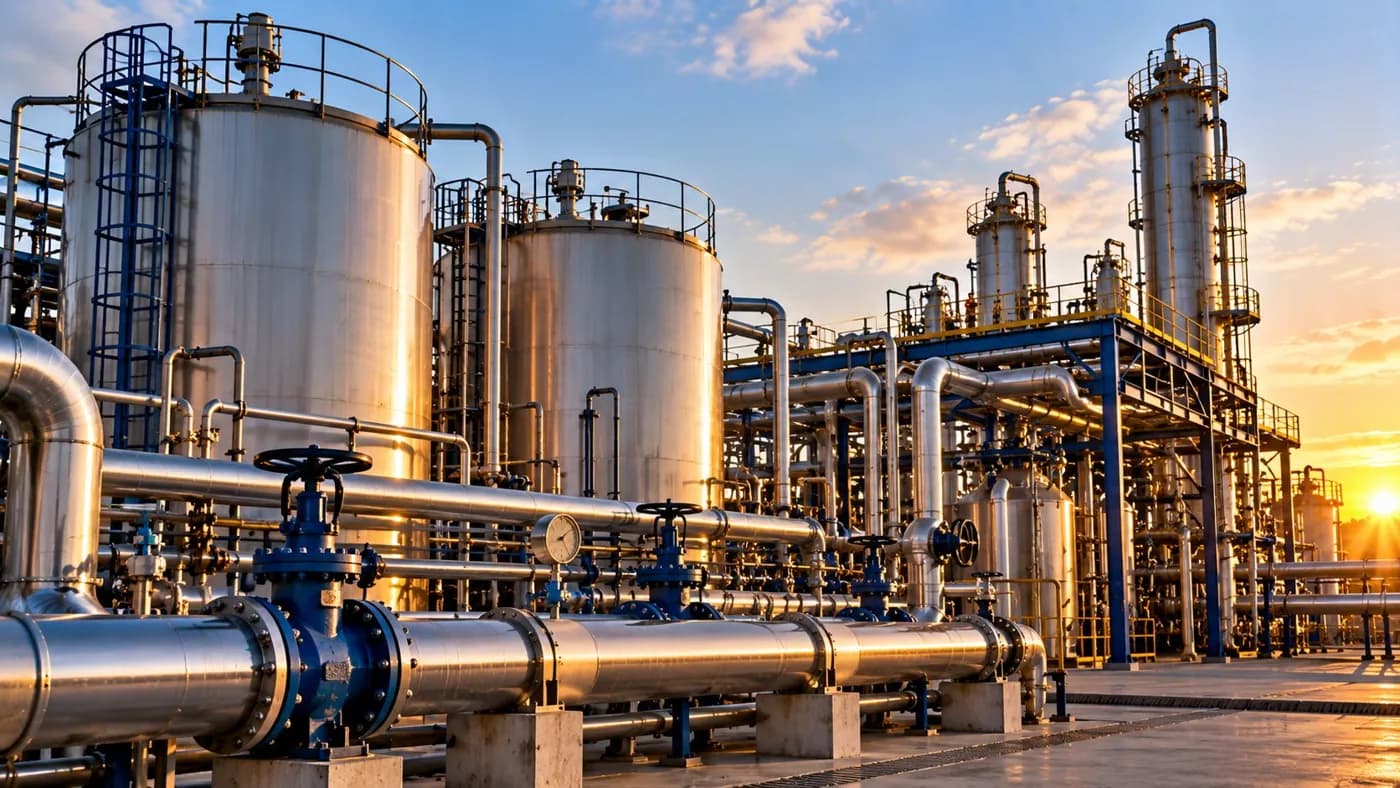
The basic process chemicals, from trial packs to tanker loads: mineral and organic acids, caustic soda and potash, soda ash, peroxide and hypochlorites, alum, PAC and ferric chloride, plus silicates, phosphates and EDTA for treatment, textile, detergent and chemical plants.
- Products
- 50
- Product groups
- 6
- Industries served
- 6
- Order size
- Trial bag to tanker
The essentials of every process plant
These are the single-component chemicals that process plants use every day, as opposed to ready-blended treatment programmes. Hydrochloric, nitric, phosphoric, acetic, oxalic and sulphamic acids handle pickling, passivation, descaling, neutralisation and synthesis. Caustic soda as lye, flakes or prills, caustic potash, soda ash light, potassium carbonate and the bicarbonates supply alkalinity for soap and detergent making, textile scouring and effluent pH correction.
Oxidants cover bleaching and disinfection: hydrogen peroxide at 35, 50 and 60%, sodium and calcium hypochlorite, stable bleaching powder, peracetic acid, sodium chlorite for chlorine dioxide generation, potassium permanganate, and the sodium, ammonium and potassium persulphates used as polymerisation initiators. For clarification there are aluminium sulphate, poly aluminium chloride, ferric chloride and anionic polyelectrolyte.
The range is completed by sodium metasilicate and orthosilicate, STPP and SHMP, sodium gluconate, nitrite and nitrate, sulphur, and EDTA acid with its sodium, potassium and metal chelates. Lithionyx confirms grade, concentration and form, technical or food grade, against your requirement before quoting.
50 products in 6 groups
Each listing has its own page with CAS number, typical use and documents. Ask for a quote on one product or send your full requirement.
Acids
Mineral and organic acids for processing and cleaning: hydrochloric acid for steel pickling and ion-exchange regeneration, nitric acid for passivation and nitration, phosphoric acid 86% in technical and food grades, acetic acid for pH control and dyeing, oxalic acid for rust and stain removal, sulphamic acid for descaling, and hydrobromic acid for bromination in pharma and agrochemical synthesis.
- CAS 64-19-7CH₃COOH
Acetic Acid
pH control, textile dyeing, pharma synthesis and vinyl acetate manufacture
LX-IPC-001 - CAS 7647-01-0HCl
Hydrochloric Acid
Steel pickling, pH control, ion-exchange regeneration and chemical synthesis
LX-IPC-002 - CAS 7664-38-2H₃PO₄
Phosphoric Acid 86% — Technical / Food Grade
Metal phosphating, food acidulant, water treatment and phosphate salt making
LX-IPC-003 - CAS 7697-37-2HNO₃
Nitric Acid
Metal passivation and etching, nitration and fertiliser manufacture
LX-IPC-004 - CAS 6153-56-6C₂H₂O₄·2H₂O
Oxalic Acid
Rust and stain removal, textile and leather bleaching, marble polishing
LX-IPC-005 - CAS 5329-14-6H₃NSO₃
Sulphamic Acid
Descaling boilers and heat exchangers, toilet and dairy cleaners
LX-IPC-006 - CAS 10035-10-6HBr
Hydrobromic Acid
Bromination in pharma and agrochemical synthesis and bromide salt making
LX-IPC-007
Alkalis & Carbonates
Sources of alkalinity for process and treatment plants: caustic soda as lye, flakes or prills, caustic potash flakes, soda ash light, potassium carbonate, sodium and potassium bicarbonate, and liquid ammonia. Used in soap and detergent making, textile scouring, alumina and pulp processing, effluent neutralisation, glass making, food raising agents and industrial refrigeration.
- CAS 1310-73-2NaOH
Caustic Soda — Lye / Flakes / Prills
Alkali for soaps, alumina, textiles, pulp and effluent pH correction
LX-IPC-008 - CAS 1310-58-3KOH
Potassium Hydroxide (Caustic Potash Flakes)
Liquid soaps, potassium salts, alkaline batteries and biodiesel catalyst
LX-IPC-009 - CAS 584-08-7K₂CO₃
Potassium Carbonate
Specialty glass, potassium silicate, liquid detergents and food alkali
LX-IPC-010 - CAS 497-19-8Na₂CO₃
Soda Ash Light
Detergent powders, sodium silicate, glass and chemical processing
Tata Chemicals · LX-IPC-011 - CAS 7664-41-7NH₃
Liquid Ammonia
Industrial refrigeration, fertilisers, DeNOx and chemical synthesis
LX-IPC-012 - CAS 144-55-8NaHCO₃
Sodium Bicarbonate
Food raising agent, antacid, fire extinguishers and pH buffering
LX-IPC-013 - CAS 298-14-6KHCO₃
Potassium Bicarbonate
Sodium-free leavening, fire extinguishers, buffering and potassium supplement
LX-IPC-014
Oxidants, Bleaches & Disinfectants
Oxidising chemicals for bleaching, disinfection and synthesis: hydrogen peroxide at 35, 50 and 60%, sodium hypochlorite, calcium hypochlorite and stable bleaching powder for chlorination, peracetic acid for food-plant sanitising, sodium chlorite for chlorine dioxide generation, potassium permanganate for iron and manganese removal, sodium, ammonium and potassium persulphates as polymerisation initiators, plus sodium perborate, sodium periodate and potassium bromate.
- CAS 7722-84-1H₂O₂
Hydrogen Peroxide — 35% / 50% / 60%
Textile and pulp bleaching, effluent oxidation and chemical synthesis
LX-IPC-015 Stable Bleaching Powder
Drinking-water disinfection, sanitation and swimming-pool chlorination
LX-IPC-016- CAS 7681-52-9NaOCl
Sodium Hypochlorite
Water chlorination, surface disinfection, laundry and textile bleaching
LX-IPC-017 - CAS 7775-27-1Na₂S₂O₈
Sodium Persulphate
Polymerisation initiator, PCB copper etching and soil remediation
LX-IPC-018 - CAS 7778-54-3Ca(OCl)₂
Calcium Hypochlorite
Swimming-pool chlorination, drinking-water and emergency disinfection
LX-IPC-019 - CAS 7758-19-2NaClO₂
Sodium Chlorite
Chlorine dioxide generation for water treatment and pulp and textile bleaching
LX-IPC-020 - CAS 79-21-0CH₃CO₃H
Peracetic Acid
Food, dairy and beverage plant sanitising, CIP and wastewater disinfection
LX-IPC-021 - CAS 7727-54-0(NH₄)₂S₂O₈
Ammonium Persulphate
Polymerisation initiator, PCB etching, hair bleach and textile desizing
LX-IPC-022 - CAS 7727-21-1K₂S₂O₈
Potassium Persulphate
Polymerisation initiator, flour treatment, denture cleaners and etching
LX-IPC-023 Sodium Perborate
Oxygen bleach in detergents, dishwash powders and denture cleaners
LX-IPC-024- CAS 7722-64-7KMnO₄
Potassium Permanganate
Iron and manganese removal, effluent oxidation and organic synthesis
LX-IPC-025 - CAS 7790-28-5NaIO₄
Sodium Periodate
Selective oxidation of diols in pharma, carbohydrate chemistry and cellulose modification
LX-IPC-026 - CAS 7758-01-2KBrO₃
Potassium Bromate
Analytical primary standard, bromination reagent and hair-waving neutraliser oxidant
LX-IPC-027
Coagulants & Flocculants
Chemicals that clarify water and effluent: aluminium sulphate (alum), poly aluminium chloride powder and anhydrous ferric chloride as coagulants, and anionic polyelectrolyte as a flocculant for clarifiers and sludge dewatering. Used in drinking water plants, ETPs and STPs, paper and textile process water and sugar juice clarification. Anhydrous aluminium chloride is also supplied as a Friedel-Crafts catalyst.
- CAS 10043-01-3Al₂(SO₄)₃
Aluminium Sulphate
Coagulant for drinking and effluent water, paper sizing and textile mordanting
LX-IPC-028 Poly Aluminium Chloride Powder
Coagulant for drinking water, effluent, paper and textile process water
LX-IPC-029- CAS 7446-70-0AlCl₃
Aluminium Chloride
Friedel-Crafts catalyst for pharma, dyes and agrochemicals, and PAC manufacture
LX-IPC-030 - CAS 7705-08-0FeCl₃
Ferric Chloride Anhydrous
Coagulant for effluent, PCB etching and catalyst in organic synthesis
LX-IPC-031 Anionic Polyelectrolyte
Flocculant for clarifiers, sludge dewatering, mining and sugar juice clarification
LX-IPC-032
Salts, Silicates & Phosphates
Functional salts for cleaning, treatment and processing: sodium metasilicate and orthosilicate as alkaline builders, sodium tripolyphosphate and sodium hexametaphosphate as sequestrants and deflocculants, sodium gluconate as a chelant and concrete retarder, sodium nitrite for closed-loop corrosion control and diazotisation, sodium nitrate for glass and heat-transfer salts, and sulphur for vulcanisation and fungicides.
- CAS 6834-92-0Na₂SiO₃
Sodium Metasilicate — 5H2O / 9H2O / Anhydrous
Alkaline builder for detergents, metal cleaners and textile peroxide bleaching
LX-IPC-033 - CAS 13472-30-5Na₄SiO₄
Sodium Orthosilicate
High-alkali builder for heavy-duty, bottle-washing and metal cleaning compounds
LX-IPC-034 - CAS 10124-56-8(NaPO₃)₆
Sodium Hexametaphosphate (67%)
Sequestrant for water softening, scale control, ceramic deflocculation and dispersion
LX-IPC-035 - CAS 7758-29-4Na₅P₃O₁₀
Sodium Tripolyphosphate
Detergent builder, water softener and ceramic tile deflocculant
LX-IPC-036 - CAS 527-07-1C₆H₁₁NaO₇
Sodium Gluconate
Concrete set retarder, alkaline chelant for bottle washing and metal cleaning
LX-IPC-037 - CAS 7632-00-0NaNO₂
Sodium Nitrite
Corrosion inhibitor for cooling loops, diazotisation in dyes and rubber chemicals
LX-IPC-038 - CAS 7631-99-4NaNO₃
Sodium Nitrate
Glass fining, heat-transfer salts, explosives and fertiliser formulations
LX-IPC-039 - CAS 7704-34-9S
Sulphur
Sulphuric acid, rubber vulcanisation, fungicides and sulphur dye manufacture
LX-IPC-040
Chelating Agents & Dispersants
EDTA acid and its salts, which bind calcium, magnesium and metal ions: disodium, tetrasodium and dipotassium EDTA for detergents, cosmetics, textiles and laboratories, and calcium, copper, ferric, ferrous and zinc EDTA chelates for crop nutrition and food fortification. Sodium polyacrylate completes the group as a dispersant and antiscalant for water treatment, pigments, paper coatings and detergents.
- CAS 60-00-4C₁₀H₁₆N₂O₈
EDTA Acid
Raw material for EDTA salts and chelant in detergents, textiles and pharma
LX-IPC-041 - CAS 6381-92-6
EDTA Disodium
Chelating stabiliser in cosmetics, pharma, laboratory reagents and textiles
LX-IPC-042 - CAS 10378-23-1
EDTA Tetrasodium
Chelant in detergents, soaps, textile processing and pulp peroxide bleaching
LX-IPC-043 - CAS 25102-12-9
EDTA Dipotassium
Anticoagulant in blood collection tubes and chelant in cosmetics and labs
LX-IPC-044 - CAS 62-33-9
EDTA Calcium
Chelated calcium for foliar nutrition, food preservation and pharmaceuticals
LX-IPC-045 - CAS 14025-15-1
EDTA Copper
Chelated copper micronutrient for foliar sprays, fertigation and fertiliser blends
LX-IPC-046 - CAS 15708-41-5
EDTA Ferric
Chelated iron for crop nutrition, hydroponics and food iron fortification
LX-IPC-047 EDTA Ferrous
Iron(II) chelate for redox polymerisation initiators and micronutrient blends
LX-IPC-048- CAS 14025-21-9
EDTA Zinc
Chelated zinc micronutrient for rice, wheat and horticulture crops
LX-IPC-049 - CAS 9003-04-7
Sodium Polyacrylate
Dispersant and antiscalant for water treatment, pigments, paper coatings and detergents
LX-IPC-050
Specification first, documents with every batch
- 01
Grade and strength confirmed first
Grade, concentration and form, such as caustic lye, flakes or prills, 35, 50 or 60% peroxide, or technical versus food-grade phosphoric acid, are confirmed against your process before we quote.
- 02
Soda ash from Tata Chemicals
Soda ash light can be referenced to Tata Chemicals. For other products the make is stated in the quotation, with material sourced from established Indian and global producers.
- 03
Corrosives and oxidisers packed to rule
Acids, caustic lye, peroxide and hypochlorite go in 20-50 L carboys, 200 L HDPE drums, 1,000 L IBC tanks or tanker loads, every pack carrying product, batch and hazard labelling.
- 04
Solids from one bag to a truckload
Caustic flakes, soda ash, alum, PAC, phosphates and silicates come in 25/50 kg HDPE or paper bags or 500-1,000 kg jumbo bags, with the manufacturer's COA and SDS for each batch.
Brand and product names are trademarks of their respective owners and are shown for product reference only. Lithionyx Chemicals is an independent trading company; listing a make does not imply an exclusive or authorised distributorship.
Industrial Process & Water Treatment: questions buyers ask
Can't find your answer? Our team replies with the grade, documents and lead time for your requirement.
What is the difference between PAC and alum for water treatment?
Both are aluminium coagulants. Poly aluminium chloride (PAC) is partly pre-neutralised, so it consumes less alkalinity, lowers pH less and works over a wider pH range than aluminium sulphate (alum). It often forms flocs faster and performs better in cold water. Alum remains widely used for drinking water and effluent where pH is controlled. The right coagulant and dose for a particular water are found by jar testing.
Should I buy caustic soda as lye, flakes or prills?
All three are sodium hydroxide. Lye is a ready-made solution, delivered by tanker or in IBCs and dosed directly by pump, which suits large continuous users with storage tanks. Flakes and prills are solids of about 98% NaOH that are easier to store and move in bags; prills are free-flowing beads that produce less dust. Dissolving solid caustic releases a lot of heat, so always add it slowly to water, never water to caustic.
Which chlorine source should I use: sodium hypochlorite, calcium hypochlorite or bleaching powder?
Sodium hypochlorite is a liquid that is easy to dose by pump but loses strength in storage, especially in warm conditions. Calcium hypochlorite is a solid with about 65-70% available chlorine and keeps better, so it suits pools and emergency disinfection. Stable bleaching powder (chlorinated lime) carries roughly 32-35% available chlorine and leaves a lime residue, but it is widely used in India for drinking water disinfection and sanitation.
What is the difference between disodium EDTA and tetrasodium EDTA?
Both are salts of the same chelating agent and bind metal ions such as calcium, magnesium and iron. Disodium EDTA gives a mildly acidic solution, about pH 4-5.5, and is the usual choice in cosmetics, pharma and laboratory work. Tetrasodium EDTA gives a strongly alkaline solution, about pH 10.5-11.5, and suits detergents, soaps, textile processing and peroxide bleaching. EDTA acid itself is poorly soluble in water and is mainly used to make the salts.
When is peracetic acid used instead of hydrogen peroxide or chlorine?
Peracetic acid is a fast-acting oxidising sanitiser that works at low temperatures and breaks down into acetic acid, water and oxygen, without forming chlorinated by-products. It is widely used for CIP and surface sanitising in dairy, beverage and food plants and for wastewater disinfection. Hydrogen peroxide on its own is a slower disinfectant and is used mainly for bleaching and oxidation. Peracetic acid is corrosive and strongly oxidising, so it needs compatible containers and protective equipment.
How are concentrated acids, peroxide and caustic lye packed and delivered?
Liquid acids, caustic lye, hydrogen peroxide and hypochlorite are supplied in 20-50 L carboys and jerry cans, 200 L HDPE drums or 1,000 L IBC tanks, and in tanker loads for bulk users. Every pack carries product, batch and hazard labelling, and the manufacturer's COA and SDS travel with each batch. Pack type, lead time and terms are confirmed in writing in the quotation.
Need a grade or make that isn't listed?
Send the product name, CAS number, quantity and delivery location. We confirm the specification and make before we quote, and source through established Indian and global producers.