Category 07 / 14Anionic, non-ionic & amphoteric surfactants
Surfactants, Detergents & Home Care
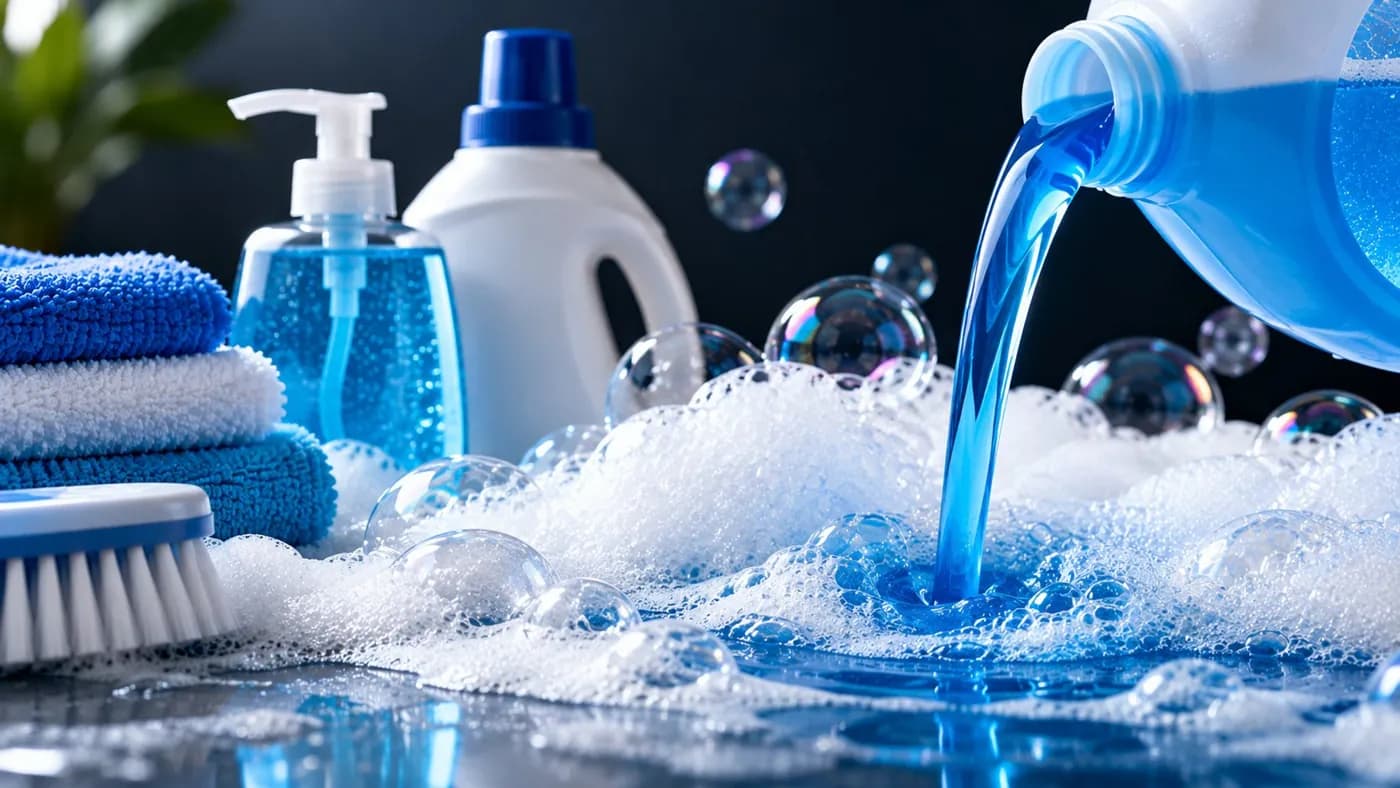
Anionic, non-ionic and amphoteric surfactants, foam boosters, acid thickeners, quaternary disinfectant actives and oxygen bleach for makers of laundry and dishwash products, surface and toilet cleaners, hand washes and shampoos across India.
- Products
- 18
- Product groups
- 1
- Industries served
- 3
- Order size
- Trial bag to tanker
The chemistry behind clean
Surfactants lower surface tension so water can wet soil, lift oil and hold it in suspension, and they create the foam users expect. The anionic workhorses here are LABSA and its neutralised sodium salt SDBS for detergent powders, cakes and dishwash; SLES 70% and 28% for liquid detergents, dishwash and shampoos; SLS powder; and alpha olefin sulphonate, a high-foaming anionic for shampoos, hand washes and detergents.
Milder non-ionic alkyl polyglucosides (lauryl, coco and capryl glucoside) and Lutensol XP/XL Guerbet alcohol alkoxylates add wetting and gentle cleaning, while cocamidopropyl betaine, cocodiethanolamide and lauryl amine oxide boost and stabilise foam and build viscosity. Benzalkonium chloride serves surface sanitisers, coated sodium percarbonate supplies oxygen bleach for laundry powders, and an acid thickener gels hydrochloric and phosphoric acid toilet cleaners. Lithionyx confirms active content and grade before quoting.
18 products in this range
Each listing has its own page with CAS number, typical use and documents. Ask for a quote on one product or send your full requirement.
- CAS 68585-34-2
SLES 70%
Primary foaming surfactant for shampoos, dishwash liquids and liquid detergents
LX-SUR-001 - CAS 68585-34-2
SLES Liquid 28%
Ready-to-use surfactant for liquid detergents, hand washes and shampoos
LX-SUR-002 - CAS 151-21-3C₁₂H₂₅NaO₄S
SLS Powder
Foaming agent for toothpaste, shampoos, detergent powders and cleaners
LX-SUR-003 - CAS 25155-30-0C₁₈H₂₉NaO₃S
SDBS Powder 90%
Anionic active for detergent powders, cleaning powders and textile scouring
LX-SUR-004 - CAS 25155-30-0C₁₈H₂₉NaO₃S
SDBS 40% Liquid
Liquid detergent active for dishwash, floor cleaners and industrial washing
LX-SUR-005 - CAS 68439-57-6
Alpha Olefin Sulphonate — Powder / Liquid
Mild high-foaming surfactant for shampoos, hand washes and detergents
LX-SUR-006 Alkyl Polyglucoside (APG)
Mild, biodegradable surfactant for baby care, cleansers and hard-surface cleaners
LX-SUR-007- CAS 110615-47-9
Lauryl Glucoside
Mild foaming co-surfactant for sulphate-free shampoos and face washes
LX-SUR-008 - CAS 141464-42-8
Coco Glucoside
Gentle nonionic cleanser for natural shampoos, baby care and body washes
LX-SUR-009 - CAS 68515-73-1
Capryl Glucoside
Wetting agent and hydrotrope for cleaners, wipes and mild cleansers
LX-SUR-010 - CAS 61789-40-0
Cocamidopropyl Betaine
Amphoteric foam booster and mildness agent in shampoos and hand washes
AWL (CAPB) · LX-SUR-011 - CAS 68603-42-9
Cocodiethanolamide
Foam booster and thickener for shampoos, dishwash and detergent liquids
AWL (CDEA) · LX-SUR-012 - CAS 1643-20-5C₁₄H₃₁NO
Lauryl Amine Oxide
Foam booster and stabiliser for dishwash, bleach cleaners and shampoos
LX-SUR-013 Acid Thickener
Thickens hydrochloric and phosphoric acid toilet and descaling cleaners
LX-SUR-014Lutensol XP / XL Series
Nonionic wetting and cleaning agents for detergents and industrial cleaners
LX-SUR-015- CAS 8001-54-5
Benzalkonium Chloride
Quaternary disinfectant for surface sanitisers, water systems and preservatives
LX-SUR-016 - CAS 15630-89-4
Sodium Percarbonate — Coated Granules
Oxygen bleach for laundry powders, stain removers and dishwasher tablets
LX-SUR-017 - CAS 27176-87-0C₁₈H₃₀O₃S
LABSA
Main anionic active for detergent powders, cakes and dishwash liquids
LX-SUR-018
Specification first, documents with every batch
- 01
Active content matched to your plant
SLES as 70% paste or 28% liquid, SDBS as 90% powder or 40% liquid, AOS as powder or liquid: active content, form and grade are confirmed against your formulation and equipment before we quote.
- 02
COA and SDS with every batch
Each batch comes with the manufacturer's COA and SDS and is traceable by batch number. Samples are available on request for formulation trials, including AWL cocamidopropyl betaine and cocodiethanolamide.
- 03
Packing for pastes, acids, powders
Viscous pastes and LABSA in 200 L HDPE drums or 1,000 L IBC tanks, powders and granules in 25/50 kg HDPE or paper bags, and bulk tanker loads for regular high-volume actives.
- 04
Hazardous actives labelled to rule
LABSA is a strong acid, benzalkonium chloride concentrate is corrosive and sodium percarbonate is an oxidiser, so each is packed and labelled with product, batch and hazard details as the applicable rules require.
Brand and product names are trademarks of their respective owners and are shown for product reference only. Lithionyx Chemicals is an independent trading company; listing a make does not imply an exclusive or authorised distributorship.
Surfactants, Detergents & Home Care: questions buyers ask
Can't find your answer? Our team replies with the grade, documents and lead time for your requirement.
What is the difference between SLES and SLS?
SLS (sodium lauryl sulphate) is an alkyl sulphate supplied as powder or needles; it foams strongly but is harsher on skin and less soluble in cold water. SLES (sodium laureth sulphate) is the ethoxylated version, typically with 1–3 moles of ethylene oxide, which makes it milder, more soluble and easy to thicken with salt. SLES is the base of most shampoos, hand washes and dishwash liquids, while SLS suits toothpaste, powders and bars.
How do I dilute SLES 70% paste without it turning into a gel?
SLES 70% is a pumpable paste, but on dilution it passes through a very viscous gel phase at roughly 30–60% active. To avoid lumps, add the paste slowly to the full quantity of water under steady stirring, rather than adding water to the paste, and allow time for it to dissolve. Below about 28% active the solution becomes a free-flowing liquid, which is why SLES Liquid 28% is offered ready to use.
What is LABSA and how is it used in detergents?
LABSA (linear alkylbenzene sulphonic acid) is the acid form of LAS, one of the most widely used anionic detergent actives. It is neutralised during manufacture, typically with caustic soda or soda ash, to form sodium LAS for detergent powders, cakes and dishwash liquids. SDBS is the ready-neutralised sodium salt, offered as 90% powder or 40% liquid, for plants that prefer not to handle the acid. LABSA itself is a strong, corrosive acid.
Why use alkyl polyglucosides in cleaners and personal care products?
Alkyl polyglucosides are non-ionic surfactants made from fatty alcohols and glucose. They are mild to skin, readily biodegradable, stable in alkali and compatible with anionic, amphoteric and cationic surfactants. Chain length sets behaviour: capryl glucoside (C8–10) is a low-foam wetting agent and hydrotrope for cleaners, while lauryl (C12–14) and coco glucoside foam well and suit sulphate-free shampoos, baby care and body washes.
Can benzalkonium chloride be combined with SLES or LABSA?
Generally no. Benzalkonium chloride is a cationic quaternary ammonium compound, and anionic surfactants such as SLES, SLS, LABSA and AOS bind to it, forming an insoluble complex that can cloud the product and deactivate the quat. Disinfectant cleaners based on BKC are therefore built with non-ionic or amphoteric surfactants such as alcohol ethoxylates, glucosides or amine oxide. The BKC concentrate itself is corrosive and needs careful handling.
How are SLES, LABSA and powder actives packed and documented?
SLES, LABSA and other liquid actives are packed in 200 L HDPE drums or 1,000 L IBC tanks, with bulk tanker loads for larger volumes, while SLS, SDBS 90%, AOS powder and coated percarbonate come in 25 or 50 kg bags. Every batch carries the manufacturer's COA and SDS with product, batch and hazard labels, and samples are available for formulation trials before a first order.
Need a grade or make that isn't listed?
Send the product name, CAS number, quantity and delivery location. We confirm the specification and make before we quote, and source through established Indian and global producers.