Category 10 / 14Boiler, cooling tower & RO programmes
Water Treatment Programme Chemicals
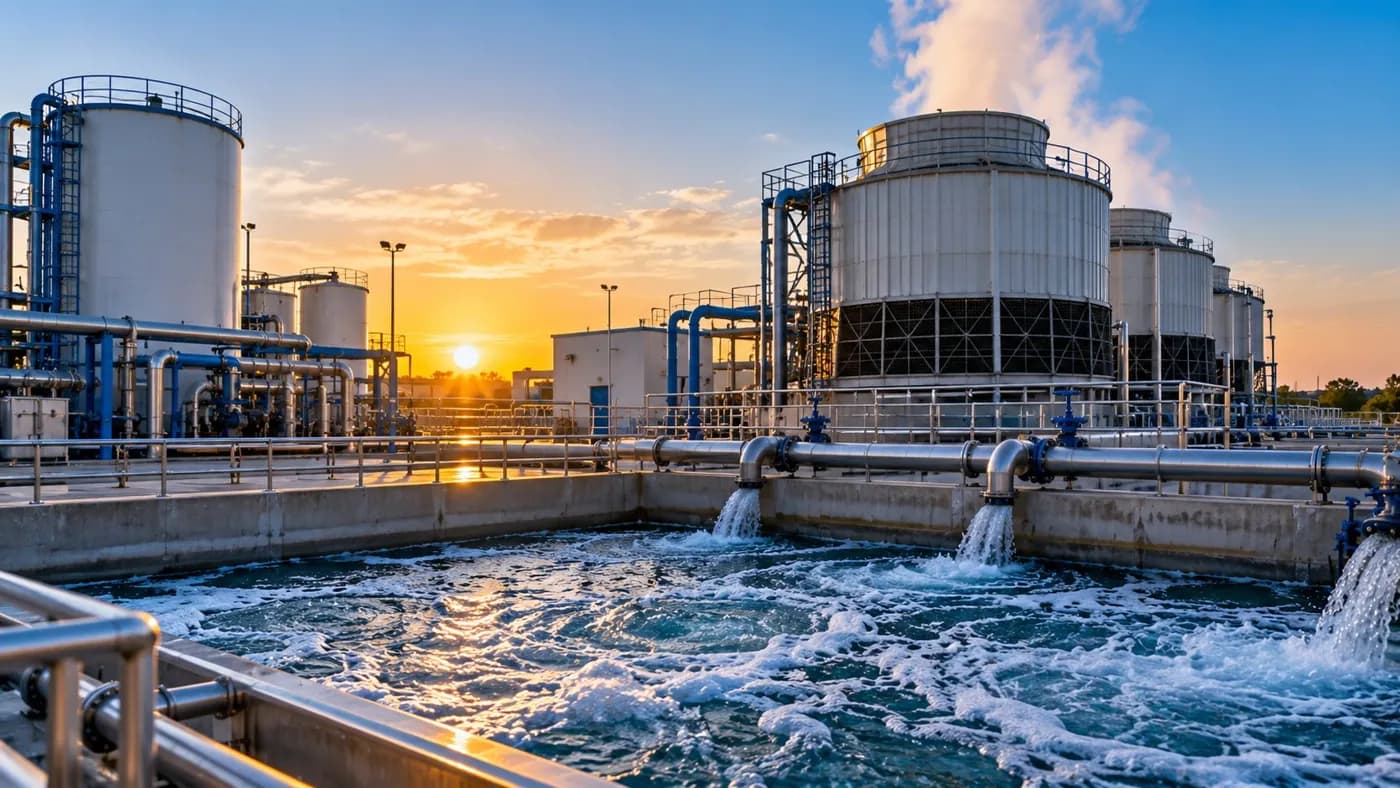
Ready treatment programmes for boilers, cooling towers and RO plants, plus descalers, corrosion inhibitors, fireside and fuel treatments, and the phosphonates and azoles formulators use, supplied to process plants and utilities across India.
- Products
- 59
- Product groups
- 7
- Industries served
- 6
- Order size
- Trial bag to tanker
Ready programmes for every water system
Each water system fails in its own way. Boilers scale and pit when hardness and dissolved oxygen get through; cooling towers foul with carbonate scale, silt and biofilm as the water cycles up; RO membranes lose flux to mineral scale and biofouling. This range treats each system with ready programmes: pH boosters, catalysed sulphite and hydrazine-based oxygen scavengers, phosphate and polymer sludge conditioners, and neutralising and filming amines for condensate lines; anti-scalants, corrosion inhibitors, dispersants and chlorine, bromine and isothiazolinone biocides for cooling water; and membrane anti-scalants, a non-oxidising RO biocide and acidic and alkaline membrane cleaners.
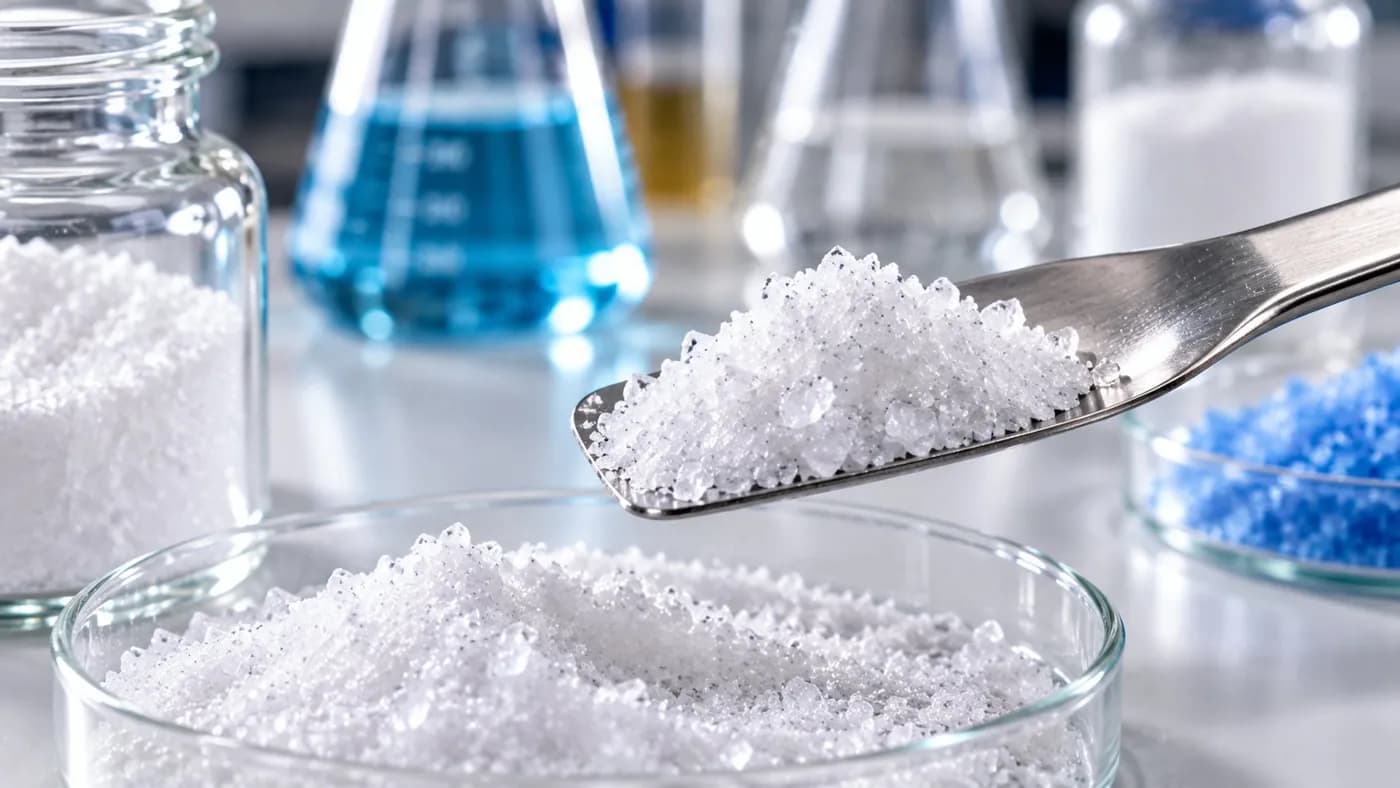
Around the programmes sit the maintenance products: liquid, powder, silica and running-boiler descalers, boil-out and passivation chemicals, inhibitors for hydrochloric, sulphuric and sulphamic acid cleaning, closed-loop and yellow-metal inhibitors, and fireside treatments for bagasse, rice husk, coal and pet coke boilers. Formulators who blend their own programmes can source the phosphonates HEDP, ATMP, DTPMP and PBTC with tolyltriazole and benzotriazole.
Lithionyx matches each product to your make-up water, boiler pressure or system metals before quoting, and ships it with the manufacturer's COA and SDS.
59 products in 7 groups
Each listing has its own page with CAS number, typical use and documents. Ask for a quote on one product or send your full requirement.
Boiler Water Treatment
Internal treatment for fire-tube, package and water-tube boilers: boiler pH boosters, catalysed sulphite and hydrazine-based oxygen scavengers, alkaline phosphate blends, phosphonate and polymer sludge conditioners, all-in-one treatments for small boilers, volatile, filming and combined amines for steam and condensate lines, a boiler defoamer and an alkalinity reducer. Used in the boiler houses of food, textile, pharma, paper and process plants.
Boiler pH Booster
Raising boiler water pH and alkalinity to limit steel corrosion
LX-WTP-001Sludge Conditioner
Keeping boiler sludge fluid and non-sticky for removal by bottom blowdown
LX-WTP-002Oxygen Scavenger — Standard & Big Boiler
Removing dissolved oxygen from boiler feedwater to stop pitting corrosion
LX-WTP-003Hydrazine-Based Oxygen Scavenger
Oxygen scavenging and metal passivation in high-pressure boiler feedwater
LX-WTP-004Multifunctional Boiler Treatment — Small Boilers
One-drum scale, corrosion and oxygen control for small and package boilers
LX-WTP-005Multifunctional Boiler Treatment — Soft Water / Raw Water
All-in-one boiler treatment matched to softened or untreated raw make-up water
LX-WTP-006Alkaline Phosphate Blend — Big Boilers
Precipitating hardness as soft sludge and holding pH in larger water-tube boilers
LX-WTP-007Phosphonate Sludge Conditioner
Inhibiting boiler scale and dispersing hardness and iron sludge
LX-WTP-008Volatile Amine Treatment
Neutralising carbonic acid to stop corrosion in steam and condensate lines
LX-WTP-009Filming Amine Treatment
Forming a protective film on steam and condensate pipework against corrosion
LX-WTP-010Combined Amine Treatment
Combined neutralising and filming amine protection for condensate systems
LX-WTP-011Boiler Defoamer
Controlling boiler water foaming and carry-over for cleaner, drier steam
LX-WTP-012Alkalinity Reducer
Lowering excess carbonate alkalinity in boiler feed and cooling tower water
LX-WTP-013
Cooling Tower Treatment
Treatment for open recirculating cooling towers: multifunctional scale and corrosion programmes, cooling water anti-scalant, anti-corrosion treatment and polymer dispersant, plus a full biocide line from chlorine, bromine and other oxidising biocides to an isothiazolinone non-oxidising biocide and a bio-dispersant that loosens biofilm. Used to keep heat exchangers, condensers and tower fill clean in power, chemical, plastics and pharma plants.
Multifunctional Cooling Treatment — Soft Water / Raw Water
One-product scale, corrosion and deposit control for open cooling towers
LX-WTP-014Cooling Water Anti-Scalant
Inhibiting calcium carbonate and phosphate scale in cooling towers
LX-WTP-015Cooling Water Anti-Corrosion Treatment
Protecting steel and copper in cooling water systems from corrosion
LX-WTP-016Dispersant
Keeping silt, iron oxide and suspended solids dispersed in cooling water
LX-WTP-017Biocide — Common
Broad-spectrum control of bacteria, algae and fungi in cooling water
LX-WTP-018Biocide — Chlorine Based
Chlorine disinfection of cooling towers and process water against slime
LX-WTP-019Biocide — Bromine Based
Bromine microbial control for cooling towers running at alkaline pH
LX-WTP-020Biocide — Oxidizing
Fast oxidising kill of bacteria, algae and slime in cooling and process water
LX-WTP-021Biocide — Non-Oxidizing (Isothiazolinone Based)
Isothiazolinone slug dosing against bacteria, fungi and algae in cooling water
LX-WTP-022Bio-Dispersant
Loosening biofilm and slime so biocides reach organisms in cooling systems
LX-WTP-023
RO Plant Chemicals
Chemicals for reverse osmosis and nanofiltration plants: RO anti-scalant dosed ahead of the membranes, a non-oxidising RO biocide that does not attack polyamide membranes, acidic and alkaline cleaners for scale and organic fouling, and RO pH boosters, including a food-grade version for drinking water and beverage use. Used in process water, boiler make-up, pharma water pre-treatment and packaged drinking water plants.
RO Anti-Scalant
Preventing mineral scale on reverse osmosis and nanofiltration membranes
LX-WTP-024RO Biocide
Controlling biofouling in RO membranes and pretreatment without chlorine damage
LX-WTP-025RO Descalant (Acidic)
Low-pH cleaning of RO membranes to remove carbonate scale and iron deposits
LX-WTP-026RO Descaling — Alkaline
High-pH cleaning of RO membranes to remove organics, biofilm and silt
LX-WTP-027RO pH Booster
Raising RO feed or permeate pH by converting dissolved CO2 into alkalinity
LX-WTP-028RO pH Booster — Food Grade
pH correction of RO water for drinking water, beverage and food processing use
LX-WTP-029
Descaling & Cleaning Chemicals
Products for cleaning plant and equipment: liquid, powder and silica descalers, alkaline and tannin-based descalers, a chloride-free descaler for stainless steel, an online descaler for running boilers and a descaler for AC plants and cooling tower fill. Also a boil-out chemical for new boilers, alkaline passivation after acid cleaning, an oil and grease remover, and a hot-wash chemical for PET and HDPE flake recycling.
Descaler — Liquid
Removing hardness scale and rust from boilers, heat exchangers and condensers
LX-WTP-030Descaler — Powder
Removing carbonate scale from boilers, heat exchangers, condensers and pipelines
LX-WTP-031Descaler — Silica
Dissolving hard silica and silicate scale in boilers, heat exchangers and evaporators
LX-WTP-032Descaler — Alkaline
Removing sulphate scale, oily deposits and scale from acid-sensitive equipment
LX-WTP-033Descaler — Tannin Based
Gradual scale removal in boilers while forming a protective film on metal
LX-WTP-034Descaler — Stainless Steel Metal
Chloride-free descaling of stainless steel vessels, heat exchangers and pipework
LX-WTP-035Descaler — Running Boiler
Online descaling of boilers in operation without shutdown or acid cleaning
LX-WTP-036AC Plant & Cooling Fill Descaler
Descaling chiller condensers, AC plant tubes and cooling tower fill packs
LX-WTP-037Boiler Boil-Out Chemical
Pre-commissioning boil-out of new boilers to remove oil, grease and mill scale
LX-WTP-038Alkaline Passivation Chemical
Neutralising and passivating steel surfaces after acid cleaning of boilers
LX-WTP-039Oil & Grease Remover
Degreasing machinery, floors, heat exchangers and metal parts before treatment
LX-WTP-040Plastic-Waste Cleaning Chemical
Hot washing of PET and HDPE flakes to remove labels, glue, oil and dirt
LX-WTP-041
Corrosion Inhibitors
Inhibitors that protect metal during cleaning and in service: acid corrosion inhibitors for hydrochloric, sulphuric and sulphamic acid descaling and pickling, a copper (yellow metal) inhibitor, an aluminium inhibitor, a closed-loop and chiller inhibitor for chilled and hot water circuits, and a radiator and duct coolant inhibitor for engines, gensets and furnace cooling. Used in maintenance cleaning, HVAC and plant utility systems.
Acid Corrosion Inhibitor — for HCl
Protecting steel during hydrochloric acid descaling, pickling and cleaning
LX-WTP-042Acid Corrosion Inhibitor — for H2SO4
Protecting steel during sulphuric acid pickling, descaling and cleaning
LX-WTP-043Acid Corrosion Inhibitor — for Sulphamic Acid
Protecting steel and copper during sulphamic acid descaling of equipment
LX-WTP-044Copper Corrosion Inhibitor
Protecting copper and brass tubes in cooling towers, chillers and heat exchangers
LX-WTP-045Aluminium Corrosion Inhibitor
Protecting aluminium heat exchangers, radiators and equipment in water systems
LX-WTP-046Closed-Loop / Chiller Corrosion Inhibitor
Corrosion control in chilled water, hot water and closed cooling circuits
LX-WTP-047Radiator / Duct Coolant Inhibitor
Corrosion and scale control in engine radiators, genset and furnace coolant ducts
LX-WTP-048
Fireside / Fuel Treatment
Fireside and fuel additives for solid- and liquid-fuel boilers: treatments for bagasse, rice husk, coal and pet coke firing that reduce slag, clinker, soot and fouling on heat-transfer surfaces, plus a fuel treatment for furnace oil and HSD that improves combustion and cuts sludge and soot. Used in sugar mills, rice mills, textile process houses and other plants running biomass, coal or oil-fired boilers.
Fireside Treatment — Bagasse
Reducing slag, clinker and soot in bagasse-fired boilers of sugar mills
LX-WTP-049Fireside Treatment — Rice Husk
Controlling slag, clinker and unburnt carbon in rice husk-fired boilers
LX-WTP-050Fireside Treatment — Coal
Improving combustion and reducing clinker, soot and fouling in coal-fired boilers
LX-WTP-051Fireside Treatment — Pet Coke
Controlling sulphur and vanadium deposits and corrosion in pet coke-fired boilers
LX-WTP-052Fuel Treatment — FO / HSD
Improving combustion and reducing sludge and soot from furnace oil and diesel
LX-WTP-053
Raw Materials for Water-Treatment Formulations
Building blocks for formulators who blend their own scale and corrosion programmes: the phosphonates HEDP, ATMP, DTPMP and PBTC, which inhibit carbonate and sulphate scale and sequester hardness, and the azoles tolyltriazole (TTA) and benzotriazole (BTA), which protect copper and brass. The same materials are used in detergents, textile processing, antifreeze and oilfield scale control.
- CAS 2809-21-4C₂H₈O₇P₂
HEDP
Scale and corrosion inhibitor for cooling water, boilers and detergent formulations
LX-WTP-054 - CAS 6419-19-8C₃H₁₂NO₉P₃
ATMP
Antiscalant and chelant for cooling water, RO and oilfield scale control
LX-WTP-055 - CAS 15827-60-8C₉H₂₈N₃O₁₅P₅
DTPMP
Antiscalant for high-hardness, high-alkalinity cooling, RO and oilfield waters
LX-WTP-056 - CAS 37971-36-1C₇H₁₁O₉P
PBTC
Antiscalant and corrosion inhibitor for cooling water, RO and high-pH systems
LX-WTP-057 - CAS 29385-43-1C₇H₇N₃
Tolyltriazole (TTA)
Copper and brass corrosion inhibitor for cooling water, antifreeze and lubricants
LX-WTP-058 - CAS 95-14-7C₆H₅N₃
Benzotriazole (BTA)
Copper corrosion inhibitor for cooling water, antifreeze, metal finishing and lubricants
LX-WTP-059
Specification first, documents with every batch
- 01
Matched to your water and system
Share your make-up water analysis, boiler pressure, cooling tower cycles or membrane type, and the programme, grade and concentration are confirmed against that requirement before we quote.
- 02
COA and SDS with every batch
Each batch ships with the manufacturer's certificate of analysis and safety data sheet. TDS and samples are available on request, so you can trial a programme before switching over.
- 03
Packed for liquid dosing
Liquid programmes come in 20-50 L carboys and jerry cans, 200 L HDPE drums or 1,000 L IBC tanks; powder descalers and phosphonates in 25/50 kg bags. Packaging is confirmed in the quotation.
- 04
Hazardous goods labelled to rule
Acid descalers, oxidising biocides and hydrazine-based scavengers are hazardous goods. Every pack carries product, batch and hazard labelling, with batch traceability back to the producer.
Water Treatment Programme Chemicals: questions buyers ask
Can't find your answer? Our team replies with the grade, documents and lead time for your requirement.
What is the difference between neutralising and filming amines for condensate lines?
Neutralising (volatile) amines travel with the steam and dissolve in the condensate, where they neutralise carbonic acid formed from carbon dioxide and raise condensate pH. Filming amines instead lay a thin, water-repellent film on pipe walls that shields the metal from carbonic acid and oxygen. Neutralising amines suit systems where carbon dioxide attack is the main problem; filming amines help where oxygen also enters the return lines. Combined treatments use both mechanisms together.
Should I use a sulphite or a hydrazine-based oxygen scavenger in my boiler?
Catalysed sulphite reacts quickly with dissolved oxygen and is widely used in low- and medium-pressure boilers, but it adds dissolved solids to the boiler water and is not suited to high-pressure units. Hydrazine adds no dissolved solids and also helps form a protective magnetite layer on steel, so it is used mainly in high-pressure boilers. Hydrazine is toxic and needs careful handling, and it is generally avoided where steam contacts food. The choice depends on pressure, feedwater quality and steam use.
Why use a bromine biocide instead of chlorine in a cooling tower?
Both kill microbes as hypohalous acids, but hypochlorous acid dissociates into the much weaker hypochlorite ion as pH rises, so chlorine loses most of its strength above about pH 8. Hypobromous acid stays largely undissociated at pH 8 to 9, so bromine performs better in alkaline towers and in water containing ammonia, where bromamines remain active. Many programmes also alternate an oxidising biocide with a non-oxidising one, such as an isothiazolinone, to broaden control.
Can I use chlorine on RO membranes, and when are acidic or alkaline cleaners used?
No. Most RO and nanofiltration membranes are polyamide thin-film composites that are damaged by free chlorine, so feed water is dechlorinated and biofouling is controlled with a non-oxidising biocide such as DBNPA. Acidic cleaners remove carbonate scale and iron or other metal oxide deposits; alkaline cleaners remove organic fouling, biofilm and silt. Always stay within the membrane manufacturer's pH and temperature limits for cleaning.
Which phosphonate should I use to formulate a scale inhibitor: HEDP, ATMP, DTPMP or PBTC?
HEDP and ATMP are widely used general-purpose inhibitors of calcium carbonate scale in cooling water. DTPMP holds up in high-hardness, high-alkalinity water and is also used against barium and strontium sulphate scale in oilfield water. PBTC has the highest calcium tolerance of the group and good stability against chlorine and bromine, so it suits high-pH, high-cycle towers on oxidising biocides. Tolyltriazole or benzotriazole is added when copper or brass is present.
What details do you need to quote a boiler or cooling tower programme?
Send the make-up water analysis (hardness, alkalinity, silica, chlorides and TDS), the boiler type and operating pressure or the cooling tower's circulation rate and cycles of concentration, the metals in the system, and your expected monthly use. The product and grade are matched against these details before we quote, and the quotation confirms packaging, lead time and terms in writing.
Need a grade or make that isn't listed?
Send the product name, CAS number, quantity and delivery location. We confirm the specification and make before we quote, and source through established Indian and global producers.