Category 06 / 14Fatty acids, alcohols, CNSL & terpenes
Oleochemicals, Terpenes & Specialty Oils
Distilled fatty acids, refined glycerine, fatty alcohols, soap noodles, cashew nut shell liquid, pine oil, dipentene and camphor for makers of alkyd resins, soaps and detergents, cosmetics, friction materials and home-care products.
- Products
- 34
- Product groups
- 4
- Industries served
- 5
- Order size
- Trial bag to tanker
Natural feedstocks, industrial performance
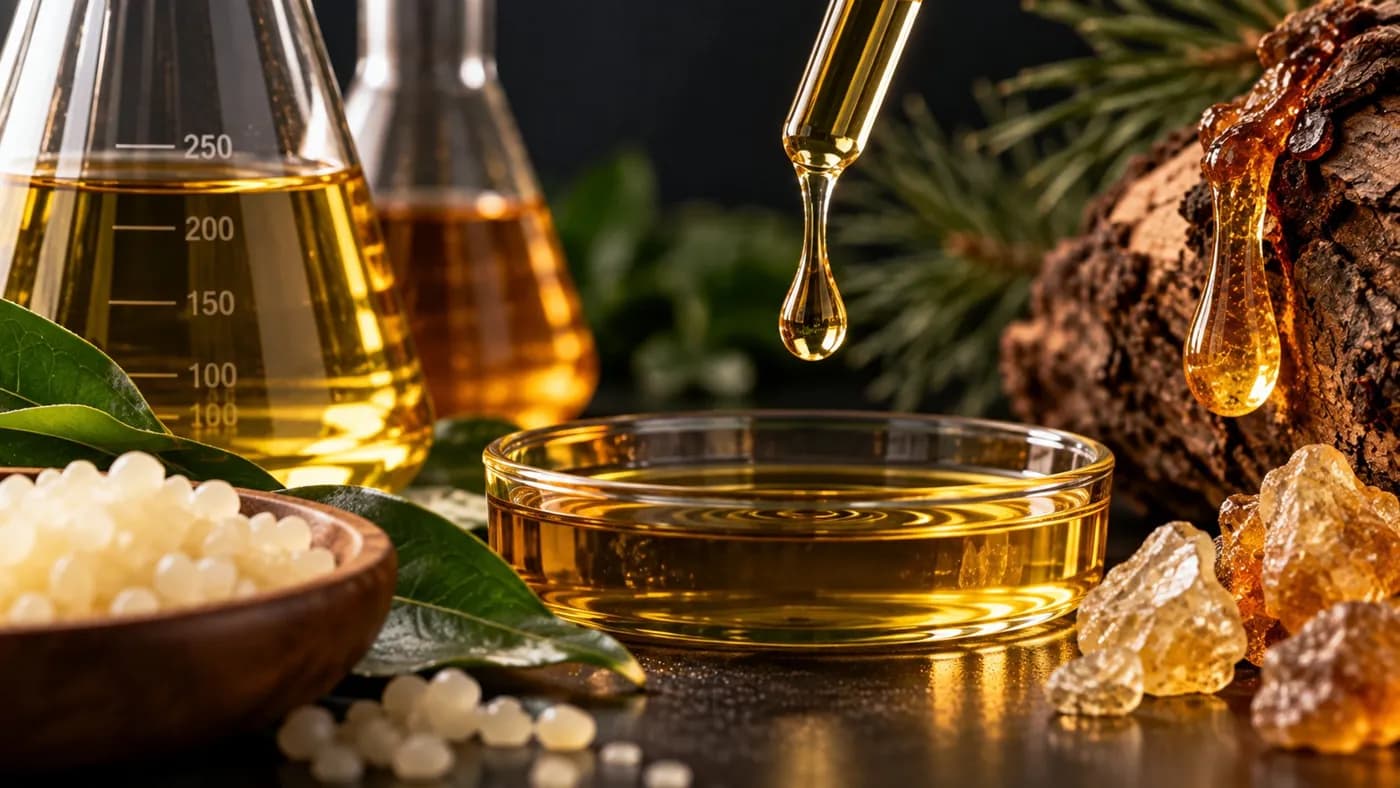
Oleochemicals are derived from vegetable oils, fats and tall oil by splitting, distillation and hydrogenation; terpenes come from pine turpentine, and CNSL from cashew shells. This range covers coconut, soybean, sunflower, linseed and tall oil fatty acids for alkyds and soaps; stearic, lauric, palmitic, myristic, oleic and behenic acids; C8-C10 acids for MCT and ester synthesis; refined glycerine, glyceryl monostearate, fractionated methyl ester and 80:20 soap noodles.
Cetyl, stearyl, cetostearyl and behenyl alcohols build body in creams and conditioners, and C12-14 alcohols feed SLS and SLES production. Technical CNSL and residol oil go into friction dust, phenolic resins and phenalkamine hardeners. Pine oil serves phenyle and disinfectant cleaners and mineral flotation, dipentene is a terpene solvent, and camphor, isobornyl acetate and fragrance oils perfume soaps, detergents and air fresheners.
Lithionyx sources from established producers including AWL and VVF, and confirms chain distribution, acid value or purity against your requirement before quoting.
34 products in 4 groups
Each listing has its own page with CAS number, typical use and documents. Ask for a quote on one product or send your full requirement.
Fatty Acids, Glycerine & Oleochemicals
Distilled and vegetable fatty acids for soaps, alkyds, esters and rubber: coconut, soybean, sunflower, linseed and tall oil fatty acids, stearic, lauric, palmitic, myristic, oleic and behenic acids, and C8, C10 and C8-C10 acids for MCT and ester synthesis. Also refined glycerine, glyceryl monostearate, glycolic acid 70%, fractionated methyl ester, acid oil and 80:20 soap noodles for toilet soap bars.
Acid Oil
Laundry soap, fatty acid distillation, biodiesel feedstock and feed fats
LX-OLE-001- CAS 67701-05-7
Coconut Fatty Acid — Distilled
Toilet and liquid soaps, coco surfactants, fatty amides, esters and alkyds
AWL (DFA 1218) · LX-OLE-002 - CAS 61790-12-3
Tall Oil Fatty Acid (Altapyne L1)
Alkyd resins, dimer acids, epoxy esters, lubricants and liquid soaps
LX-OLE-003 - CAS 68424-45-3
Linseed Oil Fatty Acid
Fast air-drying alkyds, uralkyd varnishes, printing inks and industrial enamels
LX-OLE-004 - CAS 68308-53-2
Soybean Fatty Acid
Medium and long-oil alkyds, stoving enamels, soaps and fatty amides
LX-OLE-005 - CAS 84625-38-7
Sunflower Fatty Acid
Non-yellowing alkyds for white and pastel paints, soaps and fatty esters
LX-OLE-006 - CAS 112-80-1C₁₈H₃₄O₂
Oleic Acid
Metal soaps, lubricants, ethoxylates, textile auxiliaries and pigment dispersion
AWL; VVF (Vegacid 1880/1890) · LX-OLE-007 - CAS 56-81-5C₃H₈O₃
Glycerine
Humectant for personal care and pharma, alkyd resins, polyols and inks
AWL (Refined CP/IP) · LX-OLE-008 - CAS 31566-31-1C₂₁H₄₂O₄
Glyceryl Monostearate (GMS)
Emulsifier for food and cosmetics, PVC lubricant and anti-static agent
AWL · LX-OLE-009 - CAS 79-14-1C₂H₄O₃
Glycolic Acid 70%
Industrial and dairy cleaners, boiler descaling, leather processing and skin care
LX-OLE-010 - CAS 57-11-4C₁₈H₃₆O₂
Stearic Acid
Rubber cure activator, PVC lubricant, candles, cosmetics and metal stearates
AWL · LX-OLE-011 - CAS 143-07-7C₁₂H₂₄O₂
Lauric Acid
High-lather soaps, acyl surfactants, lauric esters and cosmetic cleansers
AWL · LX-OLE-012 - CAS 57-10-3C₁₆H₃₂O₂
Palmitic Acid 98%
Isopropyl palmitate and other esters, soaps, creams, candles and metal soaps
AWL · LX-OLE-013 - CAS 544-63-8C₁₄H₂₈O₂
Myristic Acid
Isopropyl myristate and esters, shaving creams, face washes and soaps
LX-OLE-014 - CAS 112-85-6C₂₂H₄₄O₂
Behenic Acid
Hair conditioners, cosmetic thickeners, lubricant additives and slip agents
VVF · LX-OLE-015 - CAS 124-07-2C₈H₁₆O₂
Caprylic Acid (C8)
MCT and ester synthesis, flavours, sanitisers and metalworking fluids
VVF · LX-OLE-016 - CAS 334-48-5C₁₀H₂₀O₂
Capric Acid (C10)
MCT and ester synthesis, synthetic lubricants, flavours and plasticisers
VVF · LX-OLE-017 - CAS 68937-75-7
Caprylic / Capric Acid (C8–C10)
MCT and emollient esters, synthetic lubricants and flotation aids
VVF · LX-OLE-018 - AWL
Fractionated Methyl Ester
Feedstock for MES detergents, fatty alcohols, bio-solvents and lubricants
LX-OLE-019 - AWL
Soap Noodles 80:20
Base for toilet and beauty soap bars, milled and plodded into finished soap
LX-OLE-020
Cashew Nut Shell Liquid (CNSL)
Cashew nut shell liquid products from cashew processing. Technical CNSL, rich in cardanol with some cardol, is a phenolic raw material for friction dust, phenolic and phenalkamine resins and anticorrosive coatings. CNSL residol oil, the residue left after cardanol distillation, is used in friction dust and brake-lining resins, black coatings and as an industrial fuel. Specify colour, viscosity and phenol content when you enquire.
- CAS 8007-24-7
Cashew Nut Shell Oil (CNSL)
Friction dust, phenolic resins, phenalkamine hardeners and anticorrosive coatings
LX-OLE-021 CNSL Residol Oil
Friction dust and brake-lining resins, black coatings and industrial fuel
LX-OLE-022
Terpenes, Camphor & Aroma Chemicals
Turpentine- and pine-derived chemicals for cleaning, fragrance and pharma: pine oil in commercial terpineol grades for phenyle, disinfectant cleaners and mineral flotation, dipentene as a paint, resin and degreasing solvent, isobornyl acetate and isobornyl flakes for pine-camphor notes, synthetic camphor powder and camphor oil for pooja camphor, balms and repellents, and fragrance oils for home care.
- CAS 8002-09-3
Pine Oil (Terpineol — commercial grades)
Phenyle and disinfectant cleaners, mineral flotation frother and solvents
Oriental · LX-OLE-023 - CAS 138-86-3C₁₀H₁₆
Dipentene Oil
Paint and resin solvent, rubber reclaiming, degreasers and fragrance raw material
LX-OLE-024 - CAS 125-12-2C₁₂H₂₀O₂
Isobornyl Acetate
Pine and fir notes for soaps, detergents and air fresheners, camphor intermediate
LX-OLE-025 Isobornyl Flakes
Pine-camphor fragrance material and intermediate for synthetic camphor
LX-OLE-026- CAS 76-22-2C₁₀H₁₆O
Camphor Powder
Pooja camphor tablets, pain balms, vapour rubs, moth repellents and fragrances
LX-OLE-027 - CAS 8008-51-3
Camphor Oil
Pain balms and liniments, insect repellents, disinfectant cleaners and fragrances
LX-OLE-028 Fragrance Oil
Perfuming phenyle, floor cleaners, detergents, soaps, incense and air fresheners
LX-OLE-029
Fatty Alcohols
Vegarol fatty alcohols from VVF for cosmetics, pharma and detergents: cetostearyl alcohol in C16/C18 blends, cetyl alcohol and stearyl alcohol as thickeners, emollients and co-emulsifiers in creams, lotions, ointments and conditioners, behenyl alcohol for hair care and lip products, and lauryl myristyl alcohol (C12-14) as feedstock for SLS, SLES and ethoxylates.
- CAS 67762-27-0
Cetostearyl Alcohol (Vegarol 1618TA / 50:50)
Thickener and emulsion stabiliser for creams, lotions, conditioners and ointments
VVF · LX-OLE-030 - CAS 36653-82-4C₁₆H₃₄O
Cetyl Alcohol (Vegarol 1698)
Emollient, thickener and co-emulsifier for creams, lotions and ointments
VVF · LX-OLE-031 - CAS 112-92-5C₁₈H₃₈O
Stearyl Alcohol (Vegarol 1898)
Thickener and emollient for creams, antiperspirant sticks and conditioners
VVF · LX-OLE-032 - VVF
Behenyl Alcohol (Vegarol 1822 / 2270)
Thickener and conditioning agent for hair care, creams and lip products
LX-OLE-033 - VVF
Lauryl Myristyl Alcohol (Vegarol 1214 / 1216)
Feedstock for SLS, SLES and ethoxylates, emulsion stabiliser in cosmetics
LX-OLE-034
Specification first, documents with every batch
- 01
Specification agreed before quoting
Fatty acids and alcohols are specified by chain distribution, acid, iodine and saponification value; glycerine by purity and grade. We confirm the figures you need against the producer's specification before quoting.
- 02
Makes we can reference
AWL for distilled fatty acids, refined glycerine, GMS, methyl ester and soap noodles; VVF for Vegarol fatty alcohols, oleic, behenic and C8-C10 acids; Oriental for pine oil. Other products are sourced to your stated specification.
- 03
Packed for flakes, liquids and bulk
Stearic acid, GMS and fatty alcohol flakes in 25 kg bags; liquid fatty acids, glycerine, CNSL and pine oil in 200 L drums or 1,000 L IBCs; and tanker loads for regular bulk liquid demand.
- 04
Grades with matching documents
Refined glycerine is offered in CP and IP grades, with documents to match the grade ordered. Every batch carries the manufacturer's COA and SDS, and every pack is labelled with product, batch and hazard details.
Brand and product names are trademarks of their respective owners and are shown for product reference only. Lithionyx Chemicals is an independent trading company; listing a make does not imply an exclusive or authorised distributorship.
Oleochemicals, Terpenes & Specialty Oils: questions buyers ask
Can't find your answer? Our team replies with the grade, documents and lead time for your requirement.
Which fatty acid should I use for an alkyd resin?
It depends on drying speed and colour. Linseed fatty acid, rich in linolenic acid, gives fast air-drying but yellows more, so it suits industrial enamels and varnishes. Soybean and sunflower fatty acids are semi-drying with less yellowing; sunflower is preferred for white and pastel paints. Tall oil fatty acid is a semi-drying, economical option. Coconut fatty acid is non-drying and is used in short-oil alkyds for stoving enamels with amino resins.
What does 80:20 mean in soap noodles?
It is the ratio of the oil blend saponified to make the noodles: about 80% non-lauric oil, typically palm oil or palm stearin, and 20% lauric oil such as palm kernel or coconut oil. The lauric part gives quick, open lather; the palm part gives hardness and a creamier, longer-lasting bar. Toilet-grade noodles are also specified by total fatty matter (TFM), commonly around 78% or more, plus moisture and colour.
What is the difference between CNSL, cardanol and residol?
Technical CNSL is the heat-processed oil from cashew nut shells; heating converts most of its anacardic acid into cardanol, leaving a mix of mainly cardanol with cardol and polymeric material. Distilling it gives cardanol, a purer phenol used for phenalkamine hardeners and resins. Residol is the heavier residue left after distillation, used in friction dust, brake-lining resins and black coatings. Composition varies with source and process, so check each COA.
Cetyl, stearyl or cetostearyl alcohol: which should I use in a cream?
All three are fatty alcohols that thicken and stabilise emulsions and act as co-emulsifiers; they do not emulsify on their own. Cetyl alcohol (C16) gives a lighter, softer feel, while stearyl alcohol (C18) gives firmer body and is used in sticks. Cetostearyl alcohol, a C16/C18 blend in ratios such as 50:50 or 30:70, is widely used in creams, lotions and conditioners. Behenyl alcohol (C22) adds body in hair care.
Is synthetic camphor the same as natural camphor?
Both are camphor, C10H16O, but synthetic camphor is the racemic DL form made from turpentine: alpha-pinene is converted to camphene, then to isobornyl acetate and isoborneol, which is oxidised to camphor. Natural camphor from the camphor tree is the D (1R) form. Purity, melting range and impurity limits decide suitability more than origin, and pharmaceutical uses need a grade and documents that match the relevant pharmacopoeia.
Which glycerine grade do I need, and how is it packed?
CP grade refined glycerine suits alkyd resins, polyols, inks and other industrial uses. IP grade is tested to the Indian Pharmacopoeia monograph and is the usual choice for pharmaceutical, oral care and personal care products, where the documents matter as much as the purity figure. Glycerine is supplied in 200 L drums, 1,000 L IBCs or tanker loads, with the manufacturer's COA and SDS for every batch.

Need a grade or make that isn't listed?
Send the product name, CAS number, quantity and delivery location. We confirm the specification and make before we quote, and source through established Indian and global producers.