Category 05 / 14Industrial solvents, glycols & thinners
Solvents & Thinners
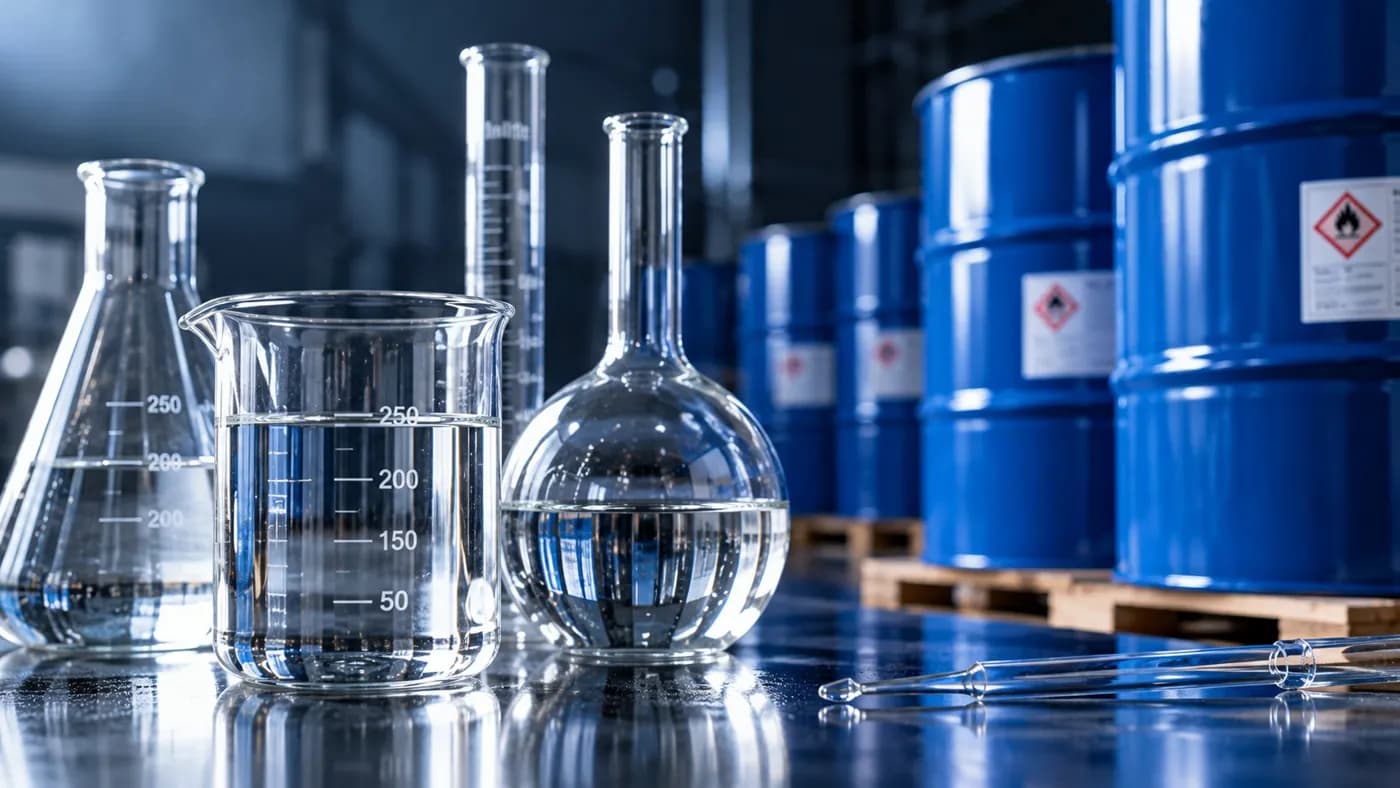
Aromatic, ketone, alcohol, ester and chlorinated solvents, MEG, MPG, DEG, TEG and DPG glycols, and ready NC, epoxy and synthetic thinners for paint, ink, adhesive, pharma, oil and gas and industrial cleaning users across India.
- Products
- 20
- Product groups
- 1
- Industries served
- 6
- Order size
- Trial bag to tanker
Solvency you can count on
Solvents dissolve resins and actives, set application viscosity and control how fast a film dries; glycols act as intermediates, humectants, coolants and gas-drying agents. The range covers aromatic solvents (toluene, xylene and C9 aromatic solvent), ketones (acetone and cyclohexanone), isopropyl alcohol and ethyl acetate, plus the chlorinated solvents methylene chloride, trichloroethylene and chloroform, which are supplied under controlled handling with the documentation the law requires.
Glycols include monoethylene glycol (MEG) for polyester and antifreeze, mono propylene glycol (MPG) for resins, coolants and, in matching grades, food, pharma and cosmetics, diethylene and triethylene glycol for polyols and natural gas dehydration, and dipropylene glycol for fragrance. For the paint trade there are ready NC, epoxy and synthetic thinners in several grades. Lithionyx confirms grade, purity and make against your use before quoting.
20 products in this range
Each listing has its own page with CAS number, typical use and documents. Ask for a quote on one product or send your full requirement.
- CAS 108-88-3C₇H₈
Toluene
Solvent for paints, adhesives, inks and rubber, and chemical feedstock
LX-SOL-001 - CAS 1330-20-7C₈H₁₀
Xylene
Solvent for alkyd and epoxy paints, thinners, inks, agrochemicals and adhesives
LX-SOL-002 - CAS 67-63-0C₃H₈O
Isopropyl Alcohol (IPA)
Cleaning, disinfectants, pharma processing, inks and coatings solvent
LX-SOL-003 - CAS 67-64-1C₃H₆O
Acetone
Fast-drying solvent for coatings, adhesives, cleaning and pharma processing
LX-SOL-004 C9 Solvent CABS 70%
Aromatic solvent for paints, thinners, resins, inks and agrochemical formulations
LX-SOL-005- CAS 79-01-6C₂HCl₃
Trichloroethylene
Metal degreasing, adhesive solvent and HFC-134a feedstock under controlled use
LX-SOL-006 - CAS 75-09-2CH₂Cl₂
Methylene Chloride (MDC)
Solvent for pharma processing, paint stripping, PU foam blowing and extraction
LX-SOL-007 - CAS 67-66-3CHCl₃
Chloroform
Feedstock for HCFC-22 and PTFE, and pharma extraction and reaction solvent
LX-SOL-008 - CAS 57-55-6C₃H₈O₂
Mono Propylene Glycol (MPG)
Polyester resins, coolants, de-icing, and humectant in food, pharma and cosmetics
LX-SOL-009 - CAS 111-46-6C₄H₁₀O₃
Diethylene Glycol (DEG)
Polyester and polyurethane polyols, gas drying, plasticisers and humectant
LX-SOL-010 Epoxy Thinner — multiple grades
Thinning epoxy primers, paints and coatings and cleaning application equipment
LX-SOL-011NC Thinner — multiple grades
Thinning nitrocellulose lacquers, wood finishes and auto refinish, and cleaning
LX-SOL-012Synthetic Thinner (Grade A & others)
Thinning synthetic enamels, alkyd primers and varnishes, and cleaning brushes
LX-SOL-013Thinner — general
General-purpose paint thinning, equipment cleaning and surface degreasing
LX-SOL-014Solvents — other grades
Ketones, esters, alcohols, glycol ethers and hydrocarbon solvents for industry
LX-SOL-015- CAS 141-78-6C₄H₈O₂
Ethyl Acetate
Solvent for flexible packaging inks, adhesives, coatings and pharma extraction
LX-SOL-016 - CAS 108-94-1C₆H₁₀O
Cyclohexanone
Solvent for PVC, vinyl and epoxy coatings, inks and adhesives; nylon intermediate
LX-SOL-017 - CAS 107-21-1C₂H₆O₂
Monoethylene Glycol (MEG)
Antifreeze, heat-transfer fluids, polyester and PET, and gas hydrate inhibition
LX-SOL-018 - CAS 25265-71-8C₆H₁₄O₃
Dipropylene Glycol
Fragrance carrier, unsaturated polyester resins, plasticisers and cosmetic solvent
LX-SOL-019 - CAS 112-27-6C₆H₁₄O₄
Triethylene Glycol (TEG)
Natural gas dehydration, air sanitiser, plasticiser and resin intermediate
LX-SOL-020
Specification first, documents with every batch
- 01
Grade and purity confirmed first
The grade of IPA, acetone, MPG or any other solvent, from technical to higher-purity, is confirmed against your purity, water content and end-use requirement before we quote, with the matching manufacturer documents.
- 02
Hazardous goods packed to rule
Flammable solvents and thinners go in closed drums, carboys and IBCs with product, batch and hazard labels; chlorinated solvents move under controlled handling with the documentation the law requires.
- 03
Carboys and drums to tankers
From 20–50 L carboys and jerry cans for trials to 200 L HDPE and MS drums, 1,000 L IBC tanks and bulk tanker loads, with packaging and lead time confirmed in writing on the quotation.
- 04
COA and SDS with every batch
Each batch ships with the manufacturer's COA and SDS and is traceable by batch number, so your incoming QC and safety teams have the test results and handling data they need. Samples on request.
Solvents & Thinners: questions buyers ask
Can't find your answer? Our team replies with the grade, documents and lead time for your requirement.
What is the difference between NC thinner, epoxy thinner and synthetic thinner?
Each is blended for a different binder. Synthetic thinner, typically based on mineral turpentine-type aliphatic solvents, thins alkyd enamels, primers and varnishes. NC thinner is a fast-evaporating blend, usually of esters, ketones, alcohols and aromatics, strong enough to dissolve nitrocellulose lacquers. Epoxy thinner, usually aromatic hydrocarbons with alcohols or ketones, suits epoxy resin and hardener systems. The wrong thinner can cause poor flow, blushing, wrinkling or slow cure.
Toluene or xylene: which solvent should I use?
Both are aromatic solvents with similar solvency for alkyd, epoxy, rubber and many other resins; the main difference is evaporation rate. Toluene boils at about 111 °C and evaporates faster, suiting quick-drying adhesives, inks and lacquers. Xylene boils at about 138–144 °C and evaporates more slowly, giving better flow and levelling in alkyd and epoxy paints and thinners. C9 aromatic solvents evaporate more slowly still, for slow-drying and baking finishes.
What is the difference between MEG, MPG, DEG and TEG?
MEG is the base for polyester fibre, PET and antifreeze. MPG has low toxicity and, in food, pharma or cosmetic grades, is used as a humectant and carrier; industrial grades go into polyester resins and coolants. DEG goes into polyols, unsaturated polyester and plasticisers, and TEG is the usual glycol for natural gas dehydration. MEG and DEG are toxic if swallowed and must never replace MPG in food or medicines.
Which solvents dissolve PVC and vinyl resins?
Cyclohexanone is one of the strongest common solvents for PVC and vinyl copolymers, which is why it is used in PVC solvent cements, vinyl coatings and inks, often blended with faster ketones such as acetone to control drying. Aromatic hydrocarbons and alcohols on their own do not dissolve PVC. Cyclohexanone is also an intermediate in nylon production and a solvent for epoxy coatings and some agrochemical formulations.
How should methylene chloride, trichloroethylene and chloroform be handled?
These chlorinated solvents do not burn easily but are hazardous if inhaled, and their vapours are heavier than air and collect in pits and low areas. Use them in closed systems or with good local exhaust ventilation, wear the gloves and respiratory protection named in the SDS, and keep drums sealed, cool, out of sunlight and away from aluminium. They are supplied under controlled handling with the documentation the law requires.
Which pack sizes are solvents and glycols supplied in?
Depending on product and quantity, solvents and glycols are packed in 20–50 L carboys or jerry cans, 200 L HDPE or MS drums, 1,000 L IBC tanks or bulk tanker loads. Flammable and chlorinated solvents are packed and labelled to the applicable rules with product, batch and hazard labels, and every batch comes with the manufacturer's COA and SDS. The quotation confirms packaging, lead time and terms in writing.
Need a grade or make that isn't listed?
Send the product name, CAS number, quantity and delivery location. We confirm the specification and make before we quote, and source through established Indian and global producers.