Category 14 / 14Lithium, tungsten & chemical intermediates
Specialty Inorganics & Chemical Intermediates
We supply lithium and tungsten compounds, silica gel and silicon dioxide, and over twenty aromatic, chlorinated and nitrogen intermediates and reagents for battery materials, glass and ceramics, absorption chillers, pharma and agrochemical synthesis, and polymer and resin production.
- Products
- 35
- Product groups
- 2
- Industries served
- 5
- Order size
- Trial bag to tanker
Specialty inorganics and synthesis building blocks
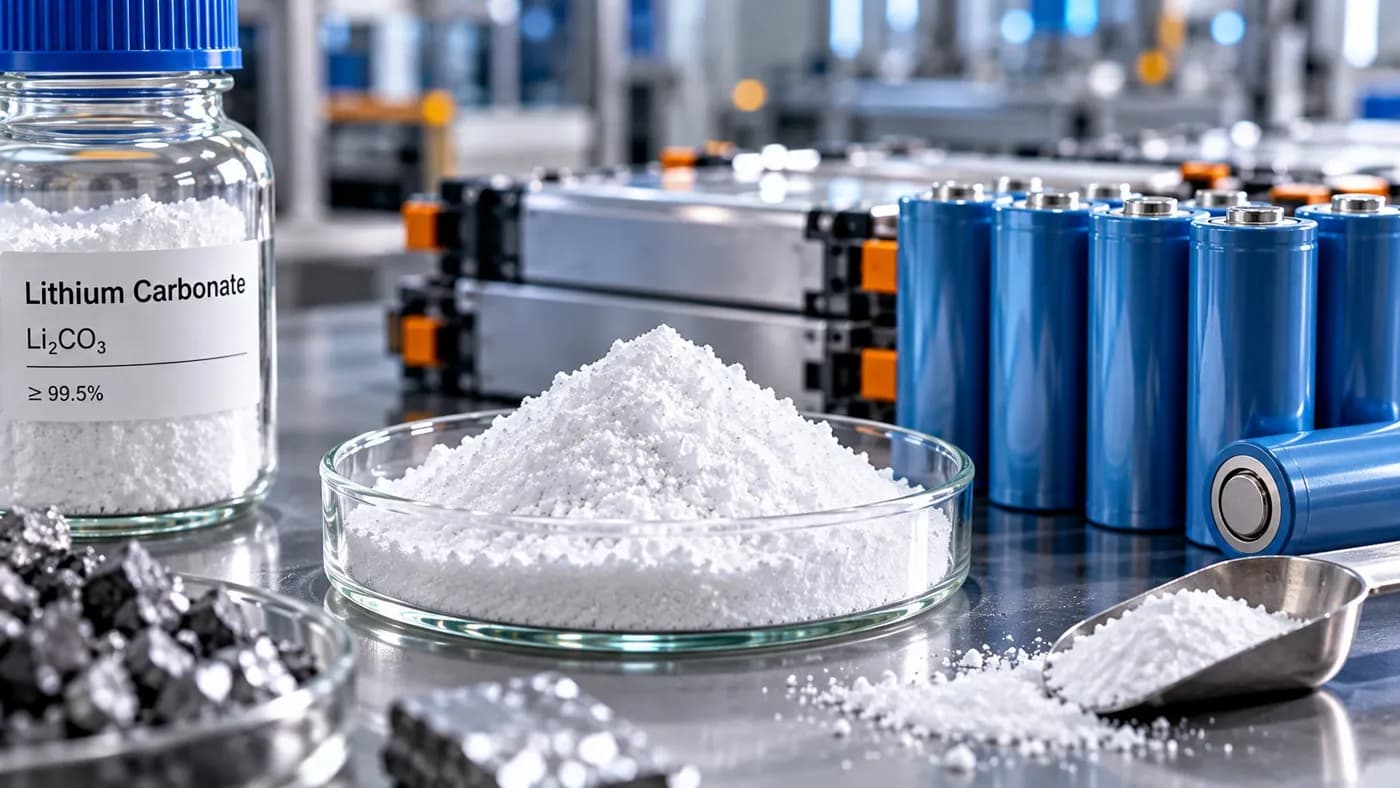
The specialty inorganics centre on lithium salts: lithium carbonate and lithium hydroxide for battery cathode materials, glass-ceramics and greases; lithium bromide for absorption chillers; lithium chloride as a liquid desiccant; lithium tetraborate as an XRF fusion flux; and lithium acetate. Sodium tungstate, tungsten trioxide and tungstic acid serve catalysts and tungsten chemistry, sodium monofluorophosphate goes into toothpaste, and silica gel and silicon dioxide work as desiccants, fillers and anti-caking agents.
The intermediates are building blocks and reagents for synthesis: benzyl chloride, benzaldehyde and benzyl alcohol; acid chlorides such as chloroacetyl chloride and trichloroacetyl chloride; the halogenating reagents NBS and NCS; alkyl halides including n-butyl, tert-butyl and methyl chloride; pyridine, ethylenediamine, PTSA and sodium borohydride; and monomers and stabilisers such as butyl acrylate, melamine, resorcinol, hydroquinone and PTBC.
Many of these materials are flammable, corrosive, toxic or regulated. Lithionyx confirms grade and purity against your requirement, shares the manufacturer's COA and SDS with every batch, and supplies regulated intermediates only under controlled handling, with the licences and safety documentation the law requires.
35 products in 2 groups
Each listing has its own page with CAS number, typical use and documents. Ask for a quote on one product or send your full requirement.
Specialty Inorganics
Lithium, tungsten and silica compounds for advanced materials and process uses. Lithium carbonate and lithium hydroxide feed battery cathode materials, glass-ceramics and greases; lithium bromide and lithium chloride serve absorption chillers and liquid desiccant systems; lithium tetraborate is an XRF fusion flux. Sodium tungstate, tungsten trioxide and tungstic acid serve catalysts and tungsten chemistry, sodium monofluorophosphate serves oral care, and silica gel and silicon dioxide serve drying and filling.
- CAS 554-13-2Li₂CO₃
Lithium Carbonate
Battery cathode precursor, glass-ceramics, glazes and lithium salt production
LX-SPI-001 - CAS 1310-66-3LiOH·H₂O
Lithium Hydroxide
Lithium greases, high-nickel battery cathodes and CO2 absorption
LX-SPI-002 - CAS 10213-10-2Na₂WO₄·2H₂O
Sodium Tungstate
Oxidation catalyst, corrosion inhibitor and precursor for tungsten chemicals
LX-SPI-003 - CAS 1314-35-8WO₃
Tungsten Trioxide
Tungsten metal production, electrochromic glass, catalysts and ceramic pigments
LX-SPI-004 - CAS 7783-03-1H₂WO₄
Tungstic Acid
Precursor for tungstates and catalysts, textile mordant and fireproofing agent
LX-SPI-005 - CAS 10163-15-2Na₂PO₃F
Sodium Monofluorophosphate
Fluoride source in anticavity toothpaste and corrosion inhibitor for concrete
LX-SPI-006 - CAS 6108-17-4
Lithium Acetate
Soluble lithium source for battery materials, polymer catalysis and lab buffers
LX-SPI-007 - CAS 7550-35-8LiBr
Lithium Bromide
Absorbent solution for vapour-absorption chillers, dehumidifiers and synthesis
LX-SPI-008 - CAS 7447-41-8LiCl
Lithium Chloride
Liquid desiccant for air conditioning, brazing fluxes and lithium metal production
LX-SPI-009 - CAS 12007-60-2Li₂B₄O₇
Lithium Tetraborate
Fusion flux for XRF and ICP sample preparation, glazes and enamels
LX-SPI-010 - CAS 112926-00-8SiO₂
Silica Gel
Moisture-control desiccant for packaging, gas drying and chromatography media
LX-SPI-011 - CAS 7631-86-9SiO₂
Silicon Dioxide
Reinforcing filler, anti-caking agent, matting agent and toothpaste abrasive
LX-SPI-012
Chemical Intermediates
Aromatic, chlorinated and nitrogen building blocks and reagents for pharma, agrochemical and polymer synthesis. The group includes benzyl chloride, benzyl alcohol and benzaldehyde; chloroacetyl and trichloroacetyl chloride; NBS and NCS; n-butyl, tert-butyl and methyl chloride; methyl bromide; pyridine, ethylenediamine, guanidine nitrate, PTSA and sodium borohydride; and resin and monomer chemicals such as melamine, resorcinol, butyl acrylate, hydroquinone and PTBC.
- CAS 100-44-7C₇H₇Cl
Benzyl Chloride
Intermediate for benzyl alcohol, quaternary ammonium disinfectants and plasticisers
LX-SPI-013 - CAS 100-51-6C₇H₈O
Benzyl Alcohol
Solvent for epoxy coatings and inks, preservative in pharma and cosmetic products
LX-SPI-014 - CAS 100-52-7C₇H₆O
Benzaldehyde
Almond flavour, fragrances, dyes and pharma and agrochemical intermediates
LX-SPI-015 - CAS 76-03-9C₂HCl₃O₂
Trichloroacetic Acid
Protein precipitation, herbicide and pharma intermediate, and chemical peel agent
LX-SPI-016 - CAS 76-02-8C₂Cl₄O
Trichloroacetyl Chloride
Intermediate for chlorpyrifos, triclopyr and pharmaceutical acylations
LX-SPI-017 - CAS 506-93-4CH₆N₄O₃
Guanidine Nitrate
Gas generant for airbag inflators, propellants and nitroguanidine synthesis
LX-SPI-018 - CAS 108-46-3C₆H₆O₂
Resorcinol
Resins for tyre cord bonding and wood adhesives, UV absorbers and hair dyes
LX-SPI-019 - CAS 110-86-1C₅H₅N
Pyridine
Solvent and base in pharma synthesis, raw material for paraquat and piperidine
LX-SPI-020 - CAS 108-78-1C₃H₆N₆
Melamine Powder
Melamine-formaldehyde resins for laminates, crockery, adhesives and coatings
LX-SPI-021 - CAS 141-32-2C₇H₁₂O₂
Butyl Acrylate
Soft monomer for acrylic emulsions in paints, adhesives, sealants and textiles
LX-SPI-022 - CAS 79-04-9C₂H₂Cl₂O
Chloroacetyl Chloride
Intermediate for chloroacetanilide herbicides, lidocaine and other APIs
LX-SPI-023 - CAS 128-08-5C₄H₄BrNO₂
N-Bromosuccinimide (NBS)
Selective bromination and oxidation reagent for pharma and fine chemical synthesis
LX-SPI-024 - CAS 128-09-6C₄H₄ClNO₂
N-Chlorosuccinimide (NCS)
Chlorinating and mild oxidising reagent for pharma and agrochemical synthesis
LX-SPI-025 - CAS 109-69-3C₄H₉Cl
N-Butyl Chloride
Feedstock for n-butyllithium, Grignard reagents and pharma intermediates
LX-SPI-026 - CAS 507-20-0C₄H₉Cl
Tertiary Butyl Chloride
Tert-butylating agent for fragrances, antioxidants and pharma intermediates
LX-SPI-027 - CAS 98-06-6C₁₀H₁₄
Tertiary Butyl Benzene
Intermediate for p-tert-butylbenzoic acid, fragrances and pharma; aromatic solvent
LX-SPI-028 - CAS 98-29-3C₁₀H₁₄O₂
Para Tertiary Butyl Catechol (PTBC)
Polymerisation inhibitor for styrene, butadiene and other reactive monomers
LX-SPI-029 - CAS 123-31-9C₆H₆O₂
Hydroquinone
Monomer inhibitor, rubber antioxidant intermediate and photographic developer
LX-SPI-030 - CAS 107-15-3C₂H₈N₂
Ethylenediamine
Raw material for EDTA, epoxy curing agents, EBDC fungicides and polyamides
LX-SPI-031 - CAS 6192-52-5
P-Toluenesulphonic Acid (PTSA)
Acid catalyst for esterification, resin curing and pharma synthesis
LX-SPI-032 - CAS 16940-66-2NaBH₄
Sodium Borohydride
Reducing agent for pharma synthesis, pulp brightening and metal recovery
LX-SPI-033 - CAS 74-87-3CH₃Cl
Methyl Chloride
Methylating feedstock for silicones, methyl cellulose, quats and butyl rubber
LX-SPI-034 - CAS 74-83-9CH₃Br
Methyl Bromide
Quarantine and pre-shipment fumigation of grain, timber and export packaging
LX-SPI-035
Specification first, documents with every batch
- 01
Purity matched to the chemistry
Battery, pharma and technical grades differ in assay, moisture and trace metals. We confirm grade, purity and impurity limits against your specification before quoting, so the material suits your reaction or cell chemistry.
- 02
COA and SDS with every batch
Each batch ships with the manufacturer's COA and SDS and is labelled with product, batch and hazard details, giving your QA and safety teams the traceability that reactive intermediates demand.
- 03
Drums, IBCs or bags by form
Liquid intermediates such as benzyl chloride, pyridine and butyl acrylate go in 200 L HDPE or MS drums, as the material requires, or 1,000 L IBC tanks; powders such as lithium carbonate, melamine and silica in 25/50 kg or jumbo bags.
- 04
Regulated materials to rule
Methyl bromide, acid chlorides, sodium borohydride and other hazardous intermediates are supplied only under controlled handling, packed and labelled as hazardous goods, with the licences and safety documentation the law requires.
Specialty Inorganics & Chemical Intermediates: questions buyers ask
Can't find your answer? Our team replies with the grade, documents and lead time for your requirement.
Should I use lithium carbonate or lithium hydroxide for cathode materials?
Lithium carbonate is the usual lithium source for LFP (lithium iron phosphate) and lower-nickel NMC cathodes. High-nickel NMC and NCA cathodes are normally made with lithium hydroxide monohydrate, because it reacts at lower sintering temperatures, roughly 700 to 800 °C, and avoids releasing CO2 and leaving residual carbonate, which harms cycle life. Lithium hydroxide is also the lithium source for lithium 12-hydroxystearate greases.
Why is lithium bromide used in absorption chillers?
In a vapour-absorption chiller, water is the refrigerant and a concentrated lithium bromide solution is the absorbent. LiBr is strongly hygroscopic and non-volatile, so it absorbs the water vapour formed in the evaporator; the diluted solution is then heated in the generator with steam, hot water or waste heat to drive the water off again, replacing a compressor. Commercial solutions usually carry a corrosion inhibitor chosen to the chiller maker's specification.
What is the difference between NBS and NCS?
N-Bromosuccinimide (NBS) and N-chlorosuccinimide (NCS) are solid, easily weighed sources of reactive halogen. NBS is the standard reagent for allylic and benzylic bromination (the Wohl-Ziegler reaction), bromohydrin formation and bromination of activated aromatics. NCS chlorinates activated aromatics and other substrates and acts as a mild oxidant, for example in the Corey-Kim oxidation. Both spare the chemist from handling elemental bromine or chlorine gas.
Why does PTBC-inhibited styrene need some dissolved oxygen?
Para tertiary butyl catechol (PTBC, 4-tert-butylcatechol) prevents styrene polymerisation by trapping peroxy radicals, which form when monomer radicals react with dissolved oxygen. Without oxygen, PTBC cannot do this and protection is lost, so inhibited styrene should keep a small amount of dissolved oxygen in storage. Styrene is commonly held above about 10 to 15 ppm PTBC, and the level is checked during storage because the inhibitor is consumed over time.
What is the difference between silica gel and precipitated or fumed silica?
All are amorphous silicon dioxide, but they are made and used differently. Silica gel is a hard, highly porous granule or bead with a large internal surface that adsorbs moisture, so it is used as a packaging desiccant, for gas drying and as chromatography media. Precipitated and fumed silicas are fine powders used as reinforcing fillers in rubber, anti-caking and free-flow agents, matting agents in coatings, and abrasives or thickeners in toothpaste.
Can you supply methyl bromide for fumigation?
Methyl bromide is an ozone-depleting substance controlled under the Montreal Protocol, and its remaining permitted uses are mainly quarantine and pre-shipment fumigation of grain, timber and export packaging. Because its sale and use are regulated in India, we supply it only to buyers who hold the licences the law requires, packed and labelled as hazardous goods with the manufacturer's COA and SDS.
Need a grade or make that isn't listed?
Send the product name, CAS number, quantity and delivery location. We confirm the specification and make before we quote, and source through established Indian and global producers.