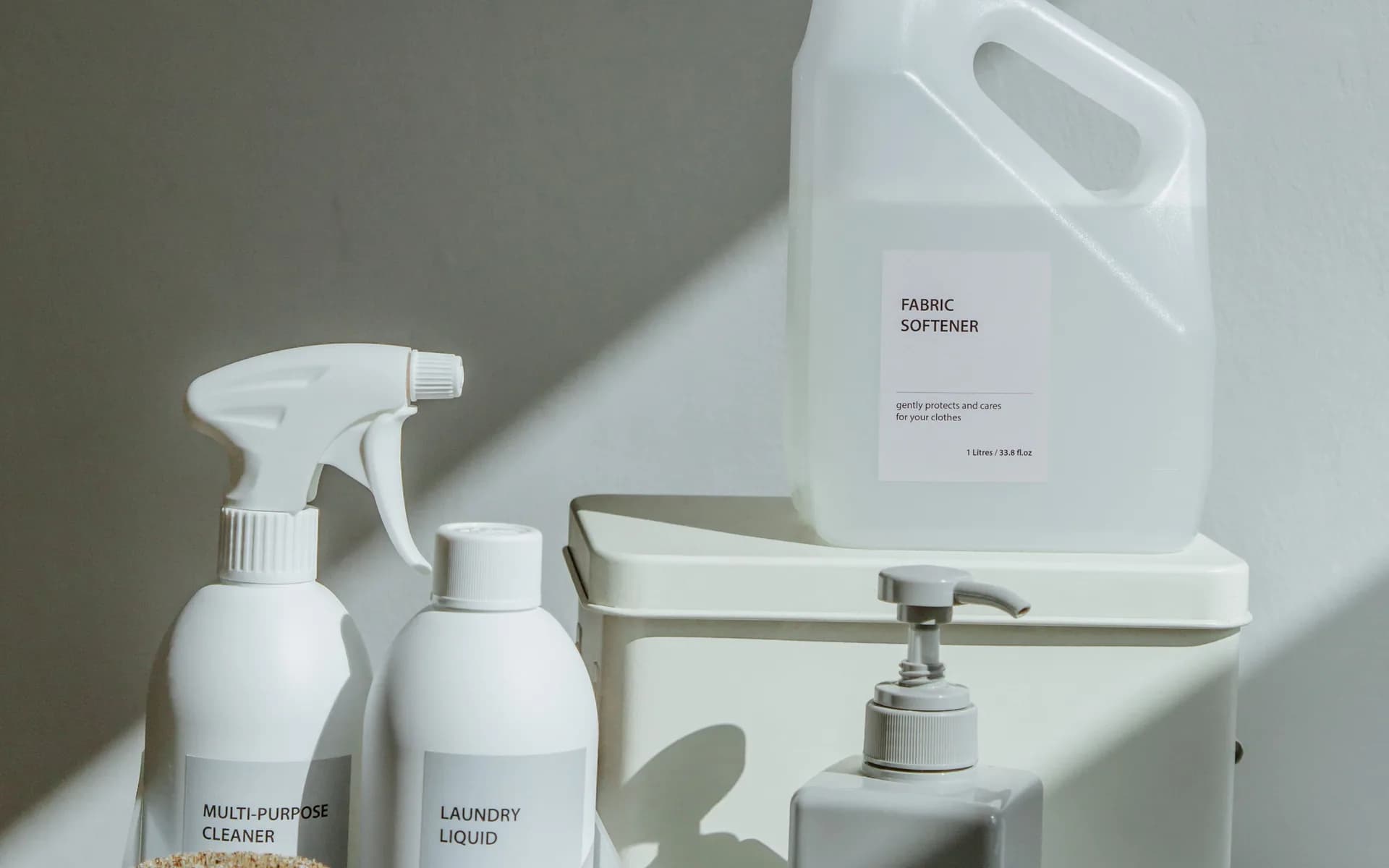
Cleaning power is built, one ingredient at a time.
Industry 12 / 16
Home Care & Detergents
Surfactants, builders and alkalis, oxygen and chlorine bleaches, descaling acids, brighteners, fragrances and preservatives for makers of detergent powders and cakes, liquid detergents, dishwash, floor and toilet cleaners, phenyle and soaps across India.
A detergent has to clean in hard water, foam the way users expect and stay stable in the pack, batch after batch. Those balances are set by the choice of surfactant, builder and bleach. We supply detergent chemicals and cleaner raw materials with active content and grade confirmed before quoting, and the manufacturer's COA and SDS with every batch.
- Products for this industry
- 104
- Product groups
- 23
- From categories
- 12
- With every batch
- COA & SDS
Inside a detergent, from active to fragrance
Laundry, dishwash and surface cleaners are built from five working parts. Each solves a different cleaning problem, and each is a raw material we source to your specification.
Surfactants
Wet, lift and hold soil in the wash
Surfactants lower surface tension so water can wet fabric and hard surfaces and lift oily soil. LABSA, neutralised to SDBS, drives powders and cakes, SLES and AOS carry liquids and dishwash, non-ionics add grease cutting, and amine oxide stabilises foam.
- 01
Surfactants
Wet, lift and hold soil in the wash
Surfactants lower surface tension so water can wet fabric and hard surfaces and lift oily soil. LABSA, neutralised to SDBS, drives powders and cakes, SLES and AOS carry liquids and dishwash, non-ionics add grease cutting, and amine oxide stabilises foam.
- 02
Builders
Soften water and keep the wash alkaline
Hard water ties up surfactant, so builders deal with calcium and magnesium and keep the wash alkaline. STPP sequesters hardness, soda ash precipitates it and supplies alkalinity, silicates protect machine parts and add structure, sodium sulphate fills powders, and citrate suits liquids.
- 03
Bleach & hygiene
Remove stains and disinfect surfaces
Oxygen bleaches such as coated sodium percarbonate and sodium perborate release hydrogen peroxide to lift tea, wine and food stains from laundry. Sodium hypochlorite and bleaching powder bleach and disinfect hard surfaces, and benzalkonium chloride is the quaternary active behind many surface sanitisers.
- 04
Acids & descalers
Dissolve limescale, rust and hard-water stains
Toilet, bathroom and kitchen descalers rely on acids that dissolve carbonate scale and rust. Sulphamic acid is a solid that gives off no fumes, phosphoric acid tackles scale and rust, oxalic acid lifts rust stains, citric acid suits milder cleaners, and an acid thickener makes liquids cling.
- 05
Finishing
Brighten, perfume and protect the product
The last few per cent decide how a product looks and smells. Optical brighteners and ultramarine blue make whites look whiter, fragrance and pine oil perfume detergents and phenyle, and preservatives such as CMIT/MIT keep liquid detergents and dishwash from spoiling in the bottle.
What a home care & detergents plant buys from us
Scroll through our product groups for this industry. The number on each tile is how many products we list in it.
- Products
- 104
- Groups
- 23
- SLES 70%
- SLES Liquid 28%
- SLS Powder
- SDBS Powder 90%
- SdSurfactants, Detergents & Home Care
- FaFatty Acids, Glycerine & Oleochemicals
- TrTerpenes, Camphor & Aroma Chemicals
- EeEmulsifiers, Esters & Thickeners
- SuSurfactants, Conditioners & Actives
- SsSalts, Silicates & Phosphates
- AdAdditives, Dispersants & Rheology
- PePreservatives
- RmRaw Materials for Water-Treatment Formulations
- AkAlkalis & Carbonates
- ObOxidants, Bleaches & Disinfectants
- ChChelating Agents & Dispersants
- 18SdSurfactants, Detergents & Home Care
- 14FaFatty Acids, Glycerine & Oleochemicals
- 7TrTerpenes, Camphor & Aroma Chemicals
- 7EeEmulsifiers, Esters & Thickeners
- 5SuSurfactants, Conditioners & Actives
- 5SsSalts, Silicates & Phosphates
- 4AdAdditives, Dispersants & Rheology
- 4PePreservatives
- 4RmRaw Materials for Water-Treatment Formulations
- 4AkAlkalis & Carbonates
- 4ObOxidants, Bleaches & Disinfectants
- 4ChChelating Agents & Dispersants
- Surfactants, Detergents & Home Care
- Oleochemicals, Terpenes & Specialty Oils
- Personal Care & Cosmetic Ingredients
- Industrial Process & Water Treatment
- Paints, Coatings & Resins
- Water Treatment Programme Chemicals
Products buyers ask us for most
01What does a builder do in a detergent powder?
A builder removes or ties up the calcium and magnesium in hard water so the surfactant can clean instead of forming scum. Sodium tripolyphosphate sequesters hardness and helps disperse soil; soda ash precipitates hardness and supplies alkalinity; sodium silicate adds alkalinity, protects washing-machine metal and gives powder granules structure. The right builder level depends on the water hardness in the markets where the detergent will be sold.
02Sodium percarbonate or sodium hypochlorite: which bleach should I use?
Sodium percarbonate is an oxygen bleach: in water it releases hydrogen peroxide, is gentle on most coloured fabrics and suits laundry powders and stain removers, but it works best in warm water, around 50 °C and above, unless an activator such as TAED is added. Sodium hypochlorite is a chlorine bleach that works in cold water and also disinfects, but it can strip colour and must never be mixed with acids or ammonia-based cleaners.
03What is the difference between an optical brightener and ultramarine blue?
An optical brightener such as CBS-X absorbs invisible ultraviolet light, around 340-370 nm, and re-emits it as visible blue light, around 420-470 nm, so fabric reflects more light and looks brighter white. Ultramarine blue is a blue pigment that adds no light: it masks yellowing by absorbing part of the longer-wavelength end of the spectrum. Many detergent powders and bars use both, with the brightener doing most of the whitening.
04Which acid should I use in a toilet or descaling cleaner?
Choose by the soil and the surface. Hydrochloric acid is fast on heavy scale but fumes and attacks metal fittings. Sulphamic acid is a solid that gives off no fumes, dissolves limescale well and can be packed as a powder or a liquid. Phosphoric acid removes scale and light rust, oxalic acid lifts rust and yellow stains, and citric acid suits milder kitchen and bathroom cleaners. Keep acids off marble, and never mix acid cleaners with bleach.
One partner for 16 industries
- 01Paints & CoatingsPigments, binders, driers, additives
- 02Printing InksPigments, resins, solvents
- 03Plastics, Polymers & RubberStabilisers, modifiers, waxes
- 04ConstructionPolymers, silanes, admixture salts
- 05Adhesives & SealantsBinders, silanes, tackifiers
- 06Paper & BoardBinders, wet-end chemicals
- 07Water & WastewaterProgrammes, coagulants, biocides
- 08Oil & GasScavengers, brines, drilling aids
- 09PharmaceuticalsExcipients, intermediates, solvents
- 10Food & NutritionAcids, preservatives, minerals
- 11Personal CareEmulsifiers, actives, preservatives
- 13Agriculture & FertilisersPhosphates, nitrates, chelates
- 14Glass, Ceramics & MetallurgyBorates, fluorides, ferro alloys
- 15Leather & TextilesChromium salts, oxidants, auxiliaries
- 16Lithium & Advanced MaterialsLithium & tungsten compounds

Tell us what your next batch needs.
Product, grade or make, quantity and delivery location are enough. We confirm the specification before we quote, and every batch ships with the manufacturer's COA and SDS.