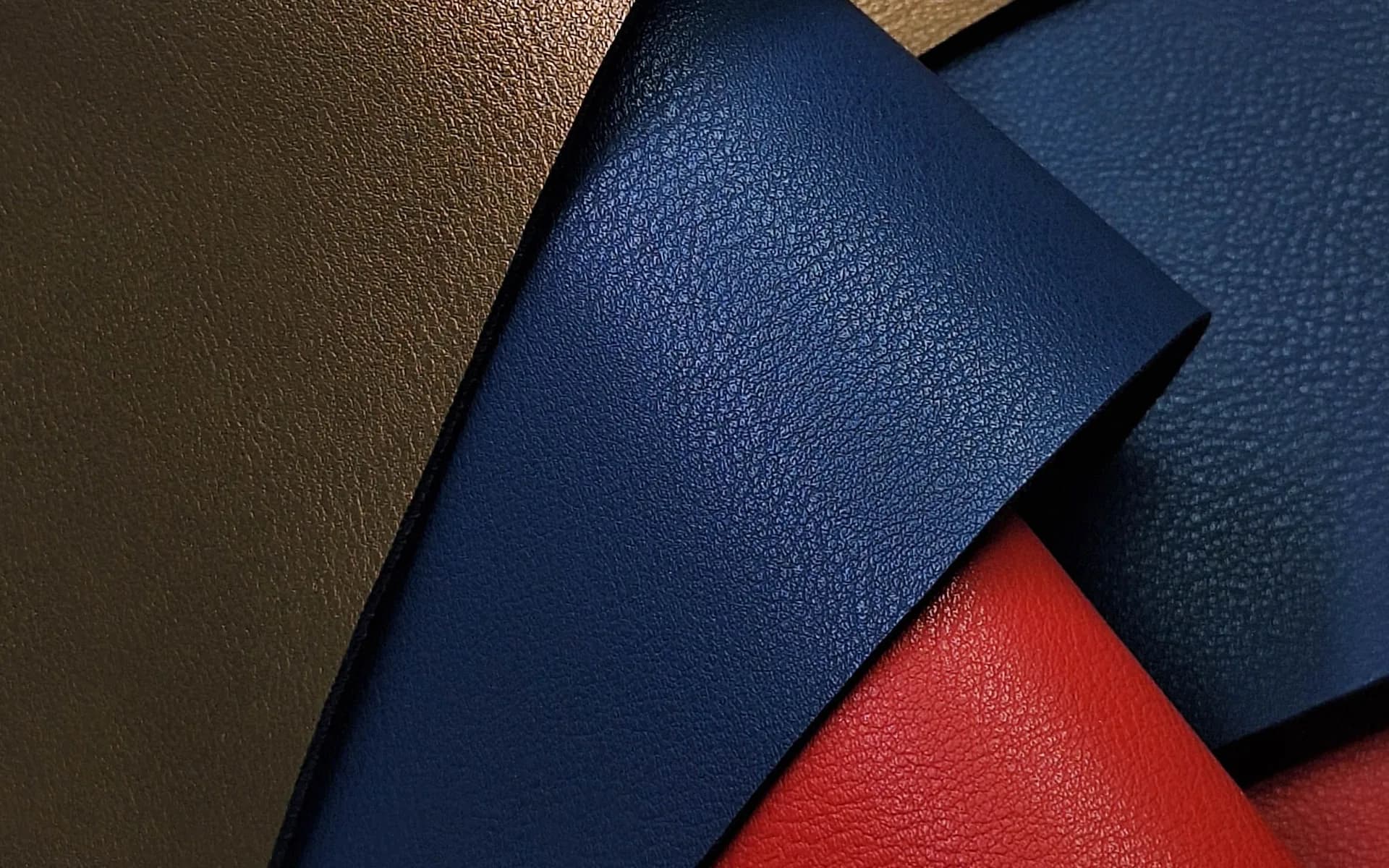
From raw hide and grey fabric to finished colour.
Industry 15 / 16
Leather & Textiles
Chrome tanning salts, liming, deliming and pickling chemicals, bleaches, dyeing salts and alkalis, wetting agents, and boiler and effluent chemicals for tanneries, leather finishers, textile processors, dye houses and printers across India.
Leather and textile processing is wet chemistry done at scale. Every bath, from liming and tanning to scouring, bleaching and dyeing, depends on consistent salts, acids, alkalis and auxiliaries, and on steam and effluent systems that stay within limits. We supply textile and leather chemicals with grade and make confirmed before quoting, and the manufacturer's COA with every batch.
- Products for this industry
- 113
- Product groups
- 34
- From categories
- 14
- With every batch
- COA & SDS
What runs through a tannery and dye house
Hides and fabrics pass through a sequence of baths, each with its own chemistry. These are the five stages where the raw materials we supply do the work.
Preparation
Cleans hide and fibre so chemistry can get in
In the tannery beamhouse, hydrated lime and sodium sulphide remove hair and open the hide's fibre structure. In textile pretreatment, caustic soda and soda ash scour natural waxes and pectins out of cotton, helped by wetting agents and detergent actives that let the liquor penetrate yarn and fabric evenly.
- 01
Preparation
Cleans hide and fibre so chemistry can get in
In the tannery beamhouse, hydrated lime and sodium sulphide remove hair and open the hide's fibre structure. In textile pretreatment, caustic soda and soda ash scour natural waxes and pectins out of cotton, helped by wetting agents and detergent actives that let the liquor penetrate yarn and fabric evenly.
- 02
Bleaching
Removes natural colour for clean whites and shades
Hydrogen peroxide is the main bleach for cotton and blends, run hot and alkaline with a silicate stabiliser and a chelant such as EDTA so metal ions do not waste it. Sodium hypochlorite and sodium chlorite serve specific fibres and processes, and oxalic acid clears iron stains and bleaches leather.
- 03
Tanning
Turns raw collagen into stable, durable leather
Ammonium salts or lactic acid delime the pelt, formic acid and salt pickle it, and basic chromium sulphate tans it to wet blue. Sodium formate masks the chrome for even penetration and sodium bicarbonate slowly raises pH so it fixes. Chrome salts are supplied for permitted industrial uses under the applicable rules.
- 04
Dyeing & printing
Puts colour on the fibre and keeps it there
Reactive dyeing of cotton needs common salt or sodium sulphate to drive dye onto the fibre and soda ash to fix it. Acetic acid and sodium acetate set and buffer dye-bath pH, lignosulphonate keeps dyes dispersed, and pigments and optical brighteners colour printing pastes, polyester fibre and finishes.
- 05
Steam & effluent
Keeps boilers clean and discharge within limits
Tanneries and dye houses run on steam and discharge heavy effluent. Oxygen scavengers and boiler treatments protect boilers from corrosion and scale, fireside treatments help coal and husk-fired units burn cleaner, and aluminium sulphate and poly aluminium chloride coagulate colour and solids in the effluent plant.
What a leather & textiles plant buys from us
Scroll through our product groups for this industry. The number on each tile is how many products we list in it.
- Products
- 113
- Groups
- 34
- Ammonium Bisulfite
- Sodium Bisulfite
- Sodium Metabisulfite
- Sodium Sulfite
- OiOil & Gas / Oilfield
- BwBoiler Water Treatment
- CcChromium, Copper, Cobalt, Nickel, Manganese & Zinc Compounds
- SdSurfactants, Detergents & Home Care
- ObOxidants, Bleaches & Disinfectants
- OpOrganic Pigments & Pigment Pastes
- ApAmmonium, Potassium & Sodium Salts
- StSolvents & Thinners
- DcDescaling & Cleaning Chemicals
- FfFireside / Fuel Treatment
- AdAdditives, Dispersants & Rheology
- RmRaw Materials for Water-Treatment Formulations
- 8OiOil & Gas / Oilfield
- 8BwBoiler Water Treatment
- 8CcChromium, Copper, Cobalt, Nickel, Manganese & Zinc Compounds
- 7SdSurfactants, Detergents & Home Care
- 7ObOxidants, Bleaches & Disinfectants
- 6OpOrganic Pigments & Pigment Pastes
- 6ApAmmonium, Potassium & Sodium Salts
- 5StSolvents & Thinners
- 5DcDescaling & Cleaning Chemicals
- 4FfFireside / Fuel Treatment
- 3AdAdditives, Dispersants & Rheology
- 3RmRaw Materials for Water-Treatment Formulations
- Oil & Gas / Oilfield
- Water Treatment Programme Chemicals
- Inorganic Salts & Metal Compounds
- Surfactants, Detergents & Home Care
- Industrial Process & Water Treatment
- Pigments & Colourants
- Solvents & Thinners
- Paints, Coatings & Resins
Products buyers ask us for most
01Why are lime and sodium sulphide used together in liming?
They do two different jobs. Sodium sulphide attacks the keratin of hair and epidermis so it can be removed, while lime keeps the liquor strongly alkaline, swells the hide and opens the collagen fibre bundles so tanning chemicals later penetrate evenly. The limed pelt is then delimed with ammonium salts or acids. Liming liquors carry much of a tannery's BOD and COD load, and sulphide must be kept away from acids, which release hydrogen sulphide.
02What does basicity mean for chrome tanning salts?
Basicity is the share of chromium's bonding capacity taken up by hydroxyl groups rather than sulphate, given as a percentage. Standard basic chromium sulphate is about 33% basic with roughly 25% Cr₂O₃. Low basicity keeps chrome complexes small so they penetrate the pelt; during basification, sodium bicarbonate or a self-basifying agent raises pH slowly, typically to about 3.8-4.0, so chrome fixes to collagen. Raising pH too fast fixes chrome on the surface.
03Why do reactive dyes need salt and soda ash?
Salt drives exhaustion and soda ash drives fixation. In water, cotton carries a negative surface charge that repels anionic reactive dyes; common salt or sodium sulphate suppresses that charge so dye moves onto the fibre. Soda ash, alone or with caustic soda for some dyes and deep shades, then raises pH so the dye bonds covalently with cellulose. Alkali added too early or in excess hydrolyses dye in the bath, wasting colour and adding to wash-off.
04How is hydrogen peroxide stabilised when bleaching cotton?
Peroxide bleaching runs hot and alkaline, typically around pH 10.5-11, where traces of iron, copper or manganese make peroxide decompose too fast, wasting bleach and causing pinholes or fibre damage. Sodium silicate, together with magnesium from the water or added salts, buffers the bath and stabilises the peroxide, while chelants such as EDTA or phosphonates bind the metal ions. Silicate can leave deposits and a harsh handle, so many mills use silicate-free stabilisers.
One partner for 16 industries
- 01Paints & CoatingsPigments, binders, driers, additives
- 02Printing InksPigments, resins, solvents
- 03Plastics, Polymers & RubberStabilisers, modifiers, waxes
- 04ConstructionPolymers, silanes, admixture salts
- 05Adhesives & SealantsBinders, silanes, tackifiers
- 06Paper & BoardBinders, wet-end chemicals
- 07Water & WastewaterProgrammes, coagulants, biocides
- 08Oil & GasScavengers, brines, drilling aids
- 09PharmaceuticalsExcipients, intermediates, solvents
- 10Food & NutritionAcids, preservatives, minerals
- 11Personal CareEmulsifiers, actives, preservatives
- 12Home Care & DetergentsSurfactants, builders, actives
- 13Agriculture & FertilisersPhosphates, nitrates, chelates
- 14Glass, Ceramics & MetallurgyBorates, fluorides, ferro alloys
- 16Lithium & Advanced MaterialsLithium & tungsten compounds




Tell us what your next batch needs.
Product, grade or make, quantity and delivery location are enough. We confirm the specification before we quote, and every batch ships with the manufacturer's COA and SDS.