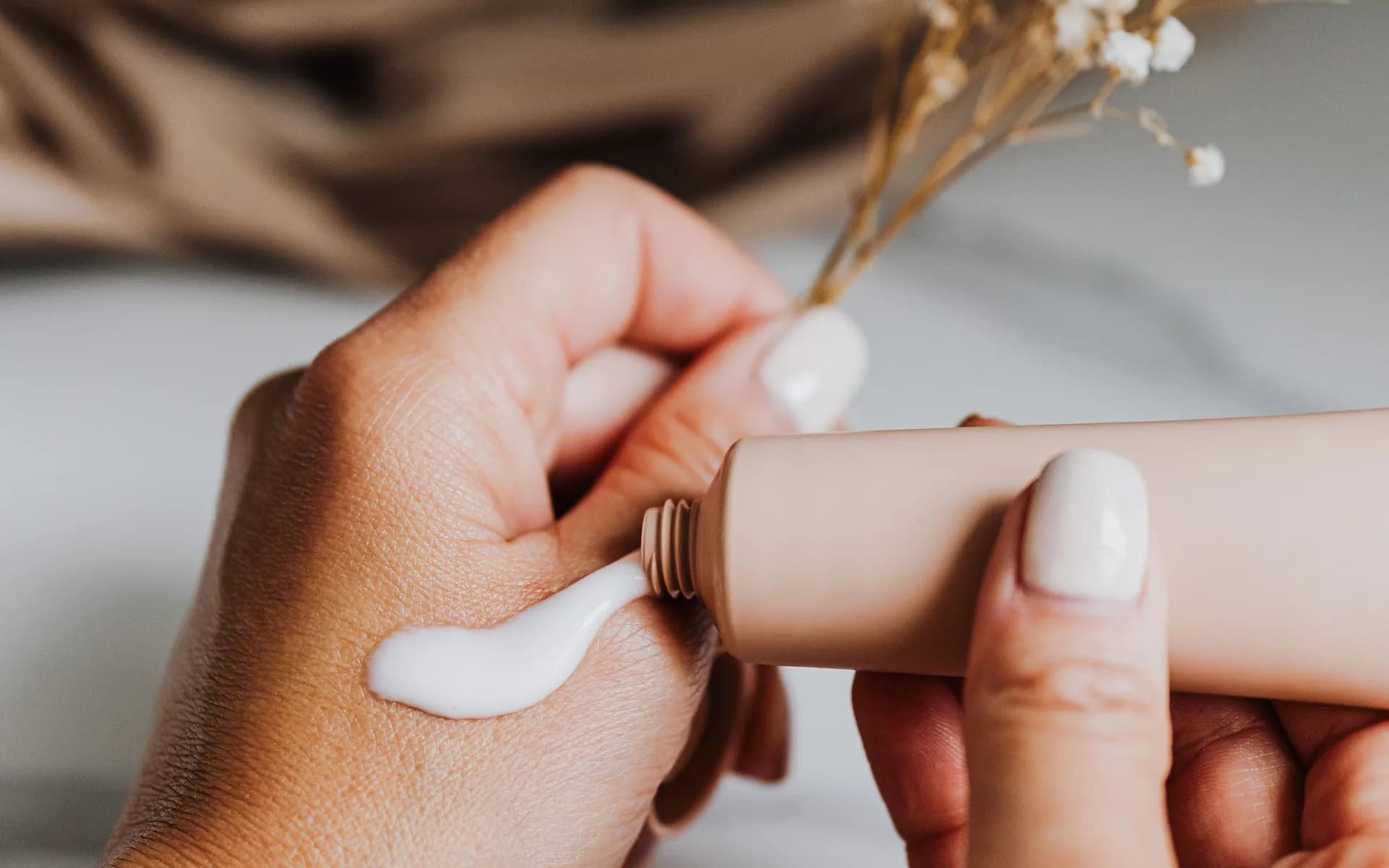
Skin and hair notice every ingredient.
Industry 11 / 16
Personal Care
Surfactants, emulsifiers, emollient esters, fatty alcohols, conditioning agents, cosmetic actives and preservatives for makers of skin creams, shampoos and conditioners, soaps and syndet bars, toothpaste and baby care products across India.
Shoppers judge a cream by how it spreads and a shampoo by how it lathers, rinses and smells, and both have to stay stable on the shelf for years. That comes down to a handful of raw materials. We supply cleansers, emulsifiers, emollients, conditioners and preservatives matched to your formulation, with the manufacturer's COA and SDS every batch.
- Products for this industry
- 118
- Product groups
- 24
- From categories
- 13
- With every batch
- COA & SDS
What goes into a cream or shampoo
Skin and hair products are built from five families of ingredients. Each has its own job in the bottle, and each is a cosmetic raw material we source to your specification.
Cleansers
Lift oil and dirt and create lather
Anionic surfactants such as SLES and alpha olefin sulphonate do the main cleaning in shampoos and body washes. Betaines and glucosides add mildness and creamy foam, while isethionates and sarcosinate make gentle syndet bars, face washes and toothpaste possible.
- 01
Cleansers
Lift oil and dirt and create lather
Anionic surfactants such as SLES and alpha olefin sulphonate do the main cleaning in shampoos and body washes. Betaines and glucosides add mildness and creamy foam, while isethionates and sarcosinate make gentle syndet bars, face washes and toothpaste possible.
- 02
Emulsifiers
Hold oil and water together in creams
Creams and lotions are emulsions that would separate without help. Self-emulsifying GMS, PEG 100 stearate, ceteareths and emulsifying wax set the emulsion type and stability, and fatty alcohols such as cetostearyl alcohol build body and keep the texture consistent from batch to batch.
- 03
Emollients
Shape skin feel, spreading and moisture
Emollient esters decide how a product spreads and how it feels once applied. Caprylic/capric triglyceride and isopropyl myristate give light, non-greasy slip, isopropyl palmitate a richer feel, and humectants such as glycerine and propylene glycol hold water in the formula.
- 04
Conditioners & actives
Smooth hair and add functional actives
Cationic conditioners such as BTAC and CTAC bind to hair and cut static and combing friction, and Polyquaternium-7 adds slip to shampoos and body washes. Widely used cosmetic actives include D-panthenol in hair and skin care and salicylic acid in exfoliating cleansers.
- 05
Preservation
Keeps water-based products free of microbes
Any product that contains water can grow bacteria and fungi once opened. Phenoxyethanol and its EHG blend suit paraben-free creams and wipes, CMIT/MIT and DMDM hydantoin protect rinse-off products, and disodium EDTA binds the metal ions that cause discolouration while boosting preservative performance.
What a personal care plant buys from us
Scroll through our product groups for this industry. The number on each tile is how many products we list in it.
- Products
- 118
- Groups
- 24
- Coconut Fatty Acid — Distilled
- Oleic Acid
- Glycerine
- Glyceryl Monostearate (GMS)
- FaFatty Acids, Glycerine & Oleochemicals
- PfPharma, Food & Specialty Chemicals
- EeEmulsifiers, Esters & Thickeners
- SdSurfactants, Detergents & Home Care
- SuSurfactants, Conditioners & Actives
- CiChemical Intermediates
- TrTerpenes, Camphor & Aroma Chemicals
- FtFatty Alcohols
- PePreservatives
- ObOxidants, Bleaches & Disinfectants
- StSolvents & Thinners
- ChChelating Agents & Dispersants
- 15FaFatty Acids, Glycerine & Oleochemicals
- 15PfPharma, Food & Specialty Chemicals
- 14EeEmulsifiers, Esters & Thickeners
- 12SdSurfactants, Detergents & Home Care
- 9SuSurfactants, Conditioners & Actives
- 7CiChemical Intermediates
- 5TrTerpenes, Camphor & Aroma Chemicals
- 5FtFatty Alcohols
- 5PePreservatives
- 5ObOxidants, Bleaches & Disinfectants
- 4StSolvents & Thinners
- 3ChChelating Agents & Dispersants
- Oleochemicals, Terpenes & Specialty Oils
- Pharma, Food & Specialty Chemicals
- Personal Care & Cosmetic Ingredients
- Surfactants, Detergents & Home Care
- Specialty Inorganics & Chemical Intermediates
- Industrial Process & Water Treatment
- Solvents & Thinners
Products buyers ask us for most
01How do I build a sulphate-free shampoo base?
Replace SLES and SLS with surfactants that contain no alkyl sulphate: alpha olefin sulphonate, sodium cocoyl or lauroyl isethionate, sodium lauryl sarcosinate, or glucosides such as coco and lauryl glucoside, usually with cocamidopropyl betaine for foam and mildness. Alpha olefin sulphonate thickens fairly easily, but many other sulphate-free systems respond poorly to salt, so formulators add a thickener such as PEG 150 distearate or xanthan gum and confirm pH, clarity and foam in trials.
02Why is cocamidopropyl betaine added to SLES-based shampoos?
Cocamidopropyl betaine is an amphoteric co-surfactant that makes SLES-based shampoos and body washes gentler, gives a denser and more stable foam, and helps the formula thicken when salt is added. It works as a secondary surfactant alongside the main anionic rather than on its own. Check the betaine's active content and its sodium chloride level on the COA, because both change how much salt the formula needs to reach its target viscosity.
03How do HLB values help in choosing an emulsifier?
HLB (hydrophilic-lipophilic balance) runs from about 0 to 20 and shows whether an emulsifier prefers oil or water. Low-HLB emulsifiers, roughly 3-6, form water-in-oil emulsions; those of about 8-18 form oil-in-water creams and lotions; those above about 15 solubilise fragrance into water. Formulators often pair a low-HLB emulsifier such as glyceryl monostearate (about 3.8) with a high-HLB one such as PEG 100 stearate or a polysorbate to match the oil phase.
04Which fluoride source suits my toothpaste: sodium fluoride or sodium monofluorophosphate?
It depends mainly on the abrasive. Sodium fluoride releases free fluoride ions that react with calcium abrasives such as calcium carbonate or dicalcium phosphate to form insoluble calcium fluoride, so it is normally paired with silica. Sodium monofluorophosphate keeps its fluoride bound to phosphate and is the usual choice with calcium-based abrasives. Stannous fluoride needs a specially stabilised formula. In every case total fluoride must stay within the limit of the applicable standard.
One partner for 16 industries
- 01Paints & CoatingsPigments, binders, driers, additives
- 02Printing InksPigments, resins, solvents
- 03Plastics, Polymers & RubberStabilisers, modifiers, waxes
- 04ConstructionPolymers, silanes, admixture salts
- 05Adhesives & SealantsBinders, silanes, tackifiers
- 06Paper & BoardBinders, wet-end chemicals
- 07Water & WastewaterProgrammes, coagulants, biocides
- 08Oil & GasScavengers, brines, drilling aids
- 09PharmaceuticalsExcipients, intermediates, solvents
- 10Food & NutritionAcids, preservatives, minerals
- 12Home Care & DetergentsSurfactants, builders, actives
- 13Agriculture & FertilisersPhosphates, nitrates, chelates
- 14Glass, Ceramics & MetallurgyBorates, fluorides, ferro alloys
- 15Leather & TextilesChromium salts, oxidants, auxiliaries
- 16Lithium & Advanced MaterialsLithium & tungsten compounds




Tell us what your next batch needs.
Product, grade or make, quantity and delivery location are enough. We confirm the specification before we quote, and every batch ships with the manufacturer's COA and SDS.