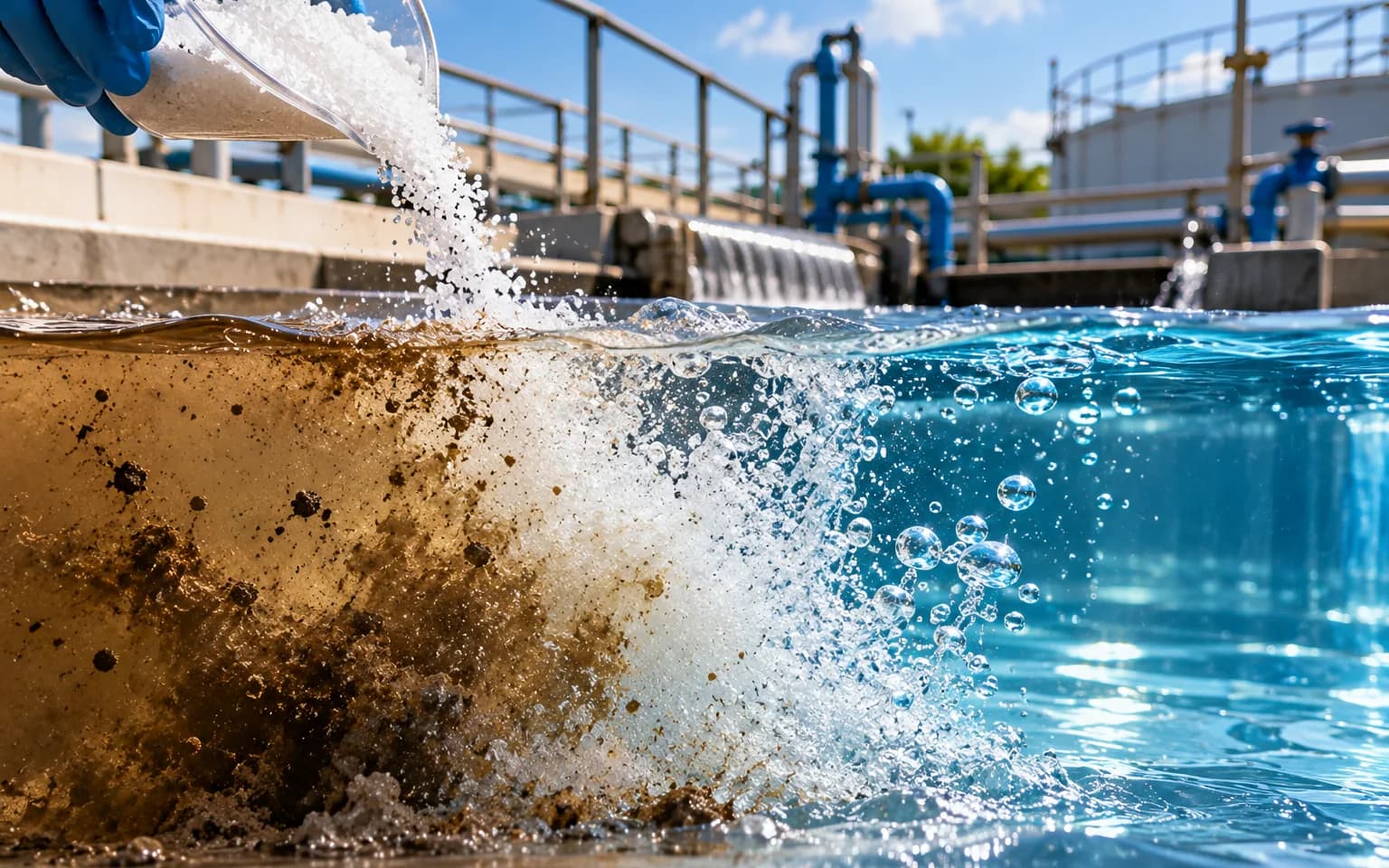
Water does the work. Chemistry keeps it working.
Industry 07 / 16
Water & Wastewater
Coagulants and flocculants, boiler, cooling tower and RO programmes, biocides, descalers and effluent pH chemicals for process plants, utilities, ETP and STP operators, water treatment companies and formulators across India.
Water touches almost every process in a plant: it raises steam, carries heat, feeds membranes and leaves as effluent that must meet discharge norms. Each use fails in its own way, through scale, corrosion, fouling or poor clarity. We supply the coagulants, inhibitors, biocides, cleaners and pH chemicals for each stage, matched to your water analysis, system metals and operating conditions.
- Products for this industry
- 124
- Product groups
- 29
- From categories
- 11
- With every batch
- COA & SDS
The anatomy of a plant's water cycle
Raw water comes in, works in boilers, cooling towers and membranes, and leaves as effluent. Five treatment jobs keep that cycle running, and we source the chemicals for each one.
Clarification
Removes turbidity, colour and suspended solids
Coagulants such as alum, PAC and ferric salts neutralise the charge on fine particles so they clump together, and a polyelectrolyte then bridges them into large flocs that settle or float. Lime softens and clarifies in one step, and ferric salts also remove phosphorus from effluent.
- 01
Clarification
Removes turbidity, colour and suspended solids
Coagulants such as alum, PAC and ferric salts neutralise the charge on fine particles so they clump together, and a polyelectrolyte then bridges them into large flocs that settle or float. Lime softens and clarifies in one step, and ferric salts also remove phosphorus from effluent.
- 02
Scale control
Keeps hardness and silica off hot surfaces
As water heats or concentrates, calcium carbonate, calcium sulphate and silica come out of solution as scale that insulates tubes and chokes membranes. Phosphonates, polymers and phosphates hold these salts in solution at low threshold doses, and descalers remove deposits that have already formed.
- 03
Corrosion control
Protects steel, copper and aluminium in service
Dissolved oxygen, low pH and carbonic acid attack boiler tubes, condensate lines and heat exchangers. Oxygen scavengers and pH boosters protect boilers, amines protect steam lines, azoles guard copper and brass, and molybdate or nitrite inhibitors protect closed chilled and hot water loops.
- 04
Microbial control
Stops slime, algae and biofouling
Warm, aerated water grows bacteria, algae and biofilm that foul fill packs, block strainers and drive corrosion under deposits. Chlorine, bromine and chlorine dioxide give a fast oxidising kill, while non-oxidising biocides and bio-dispersants reach what oxidants miss, including membrane systems that cannot tolerate chlorine.
- 05
Effluent & pH
Neutralises and polishes water before discharge
Effluent must meet pH, COD and metals limits before it leaves the plant. Alkalis and acids correct pH, oxidants such as peroxide and permanganate break down colour, odour and organics, and sodium sulphide or ferrous salts precipitate heavy metals and reduce hexavalent chromium.
What a water & wastewater plant buys from us
Scroll through our product groups for this industry. The number on each tile is how many products we list in it.
- Products
- 124
- Groups
- 29
- Boiler pH Booster
- Sludge Conditioner
- Oxygen Scavenger — Standard & Big Boiler
- Hydrazine-Based Oxygen Scavenger
- BwBoiler Water Treatment
- DcDescaling & Cleaning Chemicals
- CtCooling Tower Treatment
- OiOil & Gas / Oilfield
- ObOxidants, Bleaches & Disinfectants
- CiCorrosion Inhibitors
- RpRO Plant Chemicals
- RmRaw Materials for Water-Treatment Formulations
- CcChromium, Copper, Cobalt, Nickel, Manganese & Zinc Compounds
- CgCoagulants & Flocculants
- ApAmmonium, Potassium & Sodium Salts
- AkAlkalis & Carbonates
- 13BwBoiler Water Treatment
- 12DcDescaling & Cleaning Chemicals
- 10CtCooling Tower Treatment
- 8OiOil & Gas / Oilfield
- 8ObOxidants, Bleaches & Disinfectants
- 7CiCorrosion Inhibitors
- 6RpRO Plant Chemicals
- 6RmRaw Materials for Water-Treatment Formulations
- 6CcChromium, Copper, Cobalt, Nickel, Manganese & Zinc Compounds
- 5CgCoagulants & Flocculants
- 5ApAmmonium, Potassium & Sodium Salts
- 4AkAlkalis & Carbonates
- Water Treatment Programme Chemicals
- Oil & Gas / Oilfield
- Industrial Process & Water Treatment
- Inorganic Salts & Metal Compounds
Products buyers ask us for most
01What is the difference between a coagulant and a flocculant?
A coagulant neutralises the negative surface charge that keeps fine particles and colloids apart, so they gather into small micro-flocs; alum, PAC, ferric chloride and ferric sulphate are coagulants. A flocculant is a high-molecular-weight polymer, such as an anionic or cationic polyacrylamide, that bridges those micro-flocs into large, fast-settling flocs. Most clarifiers use both, dosed in that order, with products and doses chosen by jar testing on the actual water.
02What are cycles of concentration in a cooling tower?
Cycles of concentration (COC) compare the dissolved solids in the circulating water with those in the make-up water, usually measured by conductivity or chloride. Evaporation removes pure water, so salts build up until blowdown bleeds them off. Running more cycles saves make-up water and chemicals but raises the scaling and corrosion tendency, so anti-scalant, dispersant and sometimes acid dosing must be matched to the target COC and the make-up water analysis.
03Lime, caustic soda or magnesium hydroxide: which should I use to neutralise acidic effluent?
Caustic soda reacts fast, dissolves fully and adds no sludge of its own, but it can overshoot to a very high pH and needs careful handling. Hydrated lime is widely used, precipitates metals and fluoride, and forms gypsum sludge with sulphate-rich acids. Magnesium hydroxide reacts more slowly, buffers at around pH 9 even when overdosed and gives a denser sludge, which suits biological plants. The choice depends on the acid, the metals present, sludge handling and discharge limits.
04How much sodium metabisulphite is needed to dechlorinate RO feed water?
In theory about 1.3 to 1.4 mg/L of sodium metabisulphite removes 1 mg/L of free chlorine, because it dissolves to bisulphite, which reduces chlorine to chloride. Plants dose a margin above this to allow for mixing and flow changes, and use an ORP or free-chlorine monitor to confirm that no chlorine reaches the membranes. Heavy overdosing wastes chemical and can encourage biological growth, so make up solutions fresh rather than storing them diluted for long.
One partner for 16 industries
- 01Paints & CoatingsPigments, binders, driers, additives
- 02Printing InksPigments, resins, solvents
- 03Plastics, Polymers & RubberStabilisers, modifiers, waxes
- 04ConstructionPolymers, silanes, admixture salts
- 05Adhesives & SealantsBinders, silanes, tackifiers
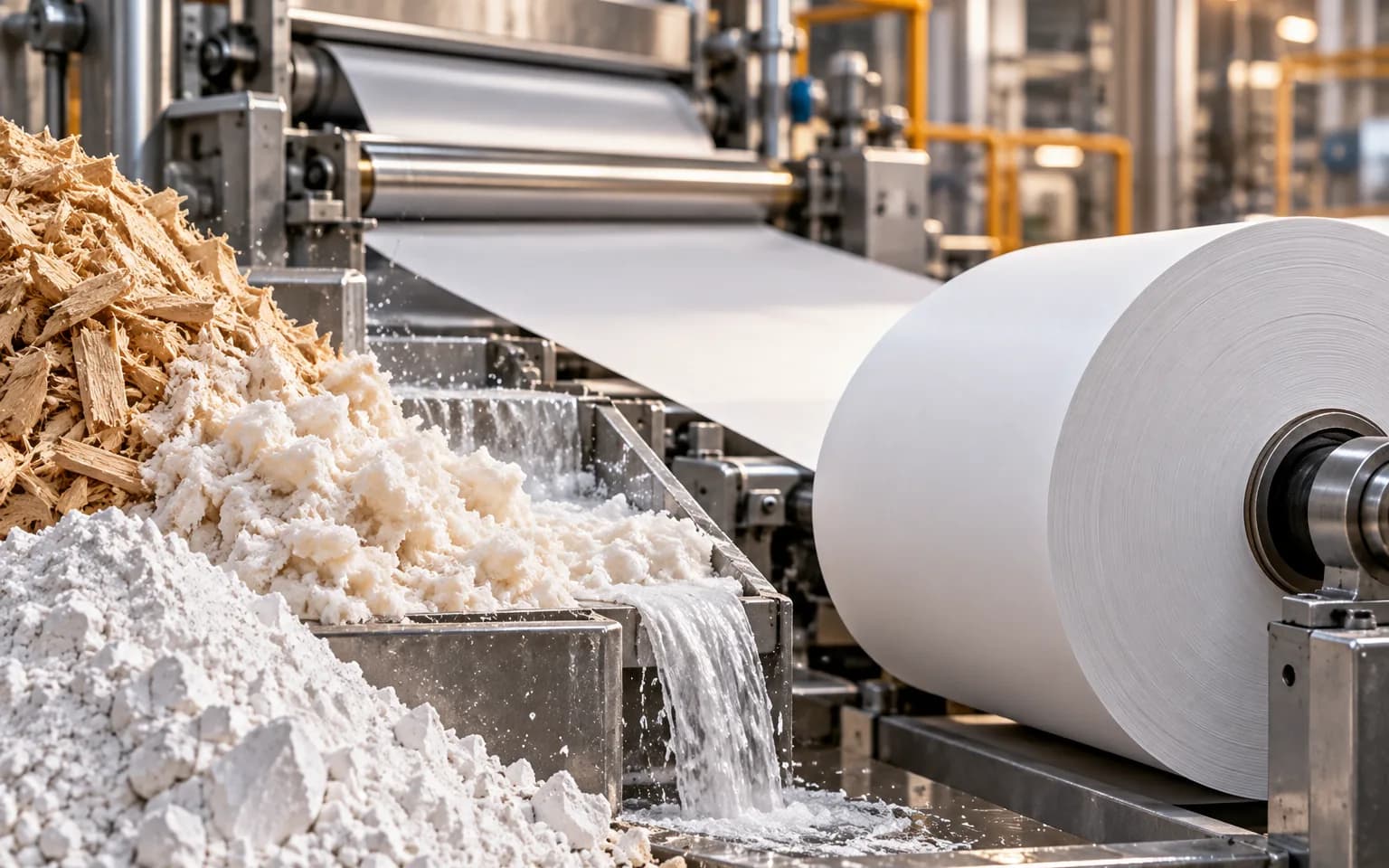
- 06Paper & BoardBinders, wet-end chemicals
- 08Oil & GasScavengers, brines, drilling aids
- 09PharmaceuticalsExcipients, intermediates, solvents
- 10Food & NutritionAcids, preservatives, minerals
- 11Personal CareEmulsifiers, actives, preservatives
- 12Home Care & DetergentsSurfactants, builders, actives
- 13Agriculture & FertilisersPhosphates, nitrates, chelates
- 14Glass, Ceramics & MetallurgyBorates, fluorides, ferro alloys
- 15Leather & TextilesChromium salts, oxidants, auxiliaries
- 16Lithium & Advanced MaterialsLithium & tungsten compounds









Tell us what your next batch needs.
Product, grade or make, quantity and delivery location are enough. We confirm the specification before we quote, and every batch ships with the manufacturer's COA and SDS.